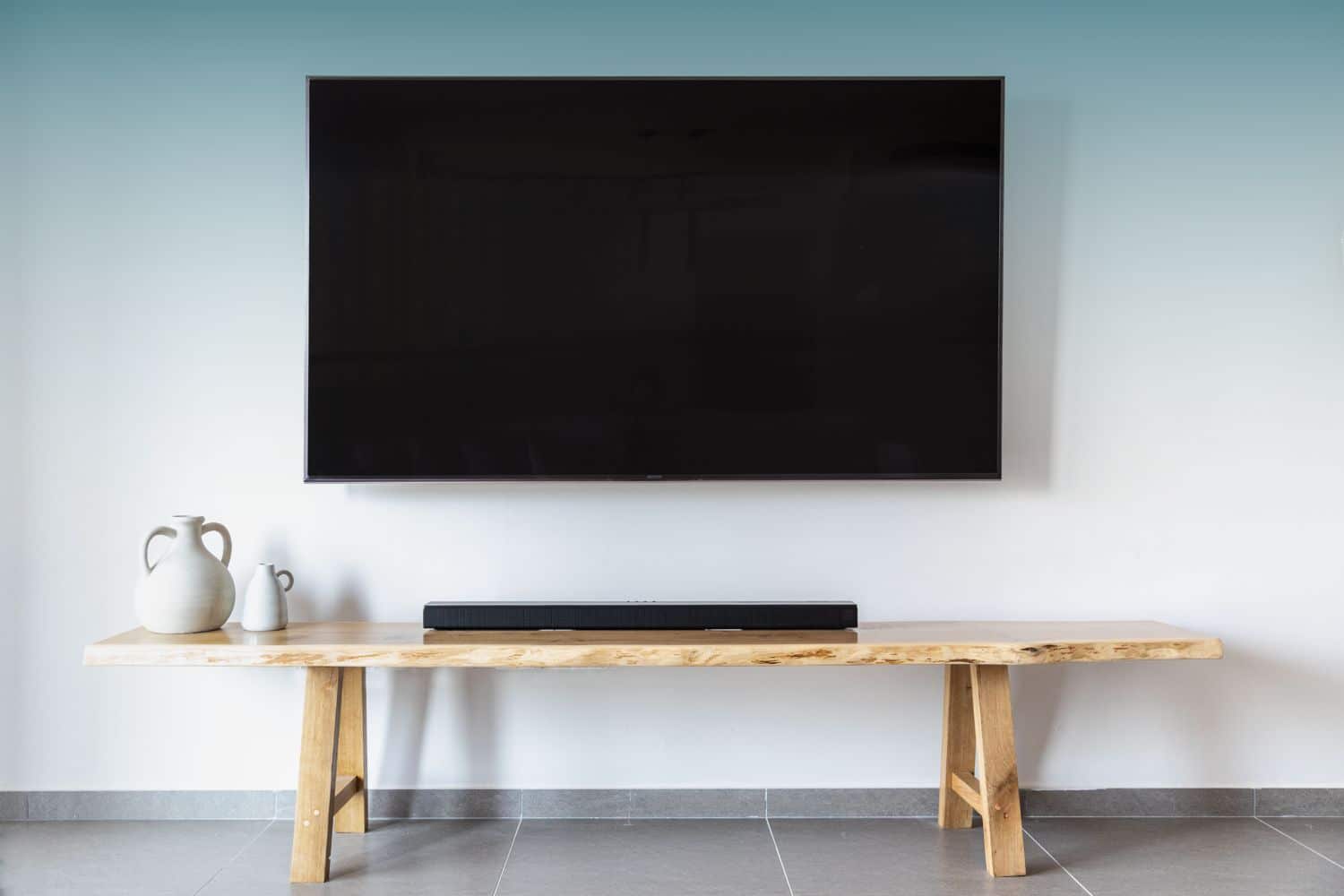
You have something to hang. Maybe it is a TV mount, a heavy mirror, a set of shelves, or a piece of art that needs a solid wall behind it. You look at the wall, reach for a nail, and pause. You wonder whether the drywall can actually handle it.
It is a fair question, and the answer matters more than most people realize. Drywall is not a structural material. Understanding what nails, screws, and anchors can actually hold in drywall, and what they cannot, keeps your belongings on the wall and your walls in one piece.
Drywall and Why Weight Matters
Standard drywall, also called gypsum board, is a panel of compressed gypsum sandwiched between two layers of paper facing. It is designed to create smooth, paintable walls and ceilings, not to carry a load. The holding power of any fastener in drywall depends on several variables:
- Drywall thickness, typically 1/2 inch in most homes and 5/8 inch in some applications
- Whether the fastener hits a wall stud or goes into the gypsum field only
- The type of fastener and mounting method used
- The direction of the load, whether a straight pull or a lateral force
- Overall drywall condition and age
The fundamental rule is simple: Drywall alone cannot support significant weight.
Holding power comes from either the framing behind it or from a properly installed anchor that distributes weight across a wider area of the panel.
What Inspectors Find Related to Drywall and Fasteners
During home inspections across New Hampshire, Maine, and Massachusetts, certain drywall and fastener issues come up regularly:
- Large patches in the walls where heavy items pulled through the gypsum board
- TV mounts and cabinet systems installed without hitting wall studs
- Ceiling fixtures not properly supported through blocking or rated ceiling boxes
- Stud damage from oversized or improperly driven fasteners
- Evidence of repeated failed anchors in the same wall area
These findings can indicate broader issues with how a home has been maintained or modified, and they factor into the overall condition assessment during a home inspection or pre-listing inspection.

How Much Weight Can a Nail Hold in Drywall?
A standard nail driven into drywall with no stud behind it holds very little, somewhere between 5 and 10 pounds, before it risks pulling through or the gypsum board crumbles around it. Drywall is brittle under load, especially when the pull direction is downward and outward.
Driving a nail at a 45-degree downward angle increases holding power compared to driving it straight in, but the improvement is modest when there is no stud behind the wall.
A nail driven through drywall and into a wall stud is a completely different situation. Wall studs are vertical framing members typically spaced 16 to 24 inches apart, and a nail properly driven into one can hold 20 to 30 pounds or more, depending on nail size and wood quality.
Screws driven into wall studs perform even better, with some capable of supporting up to 100 pounds when properly installed.
Fastener Weight Capacity at a Glance
| Fastener Type | Into Drywall Only | Into Stud |
|---|---|---|
| Standard finish nail | 5–10 lbs | 20–30 lbs |
| Screw (into stud) | Not recommended alone | Up to 100 lbs |
| Plastic expansion anchor | 5–25 lbs | N/A |
| Molly bolt/sleeve anchor | 25–50 lbs (wall) | N/A |
| Toggle bolt | 25–50 lbs | N/A |
| Snap toggle anchor | 50–100 lbs | N/A |
Note: These are general ranges. Actual holding power varies based on drywall thickness, drywall condition, installation quality, and load direction. Always follow manufacturer specifications.
Understanding Drywall Anchors and When to Use Them
When there is no stud where you need one, drywall anchors are the right solution. They work by expanding behind the drywall sheets to distribute weight across a larger area of the panel. Using the wrong anchor type for the load you are hanging is one of the most common mistakes homeowners make.
Anchor Types and Best Uses
Plastic expansion anchors are the most basic option and come in most picture-hanging kits. Expansion anchors can hold between 5 and 25 pounds on walls, depending on size, but they are not suitable for ceilings. They work fine for lightweight items like small picture frames, but fail quickly under anything heavier.
Molly bolts, also called sleeve-type anchors, expand when tightened and grip the back of the drywall firmly. Molly bolts can hold between 25 and 50 pounds on walls and are a reliable mid-range option for mirrors, shelves, and cabinet doors where a flush finish matters.
Toggle bolts use a spring-loaded wing that expands behind the drywall when inserted. They are one of the stronger wall anchor options, rated for 25 to 50 pounds or more, depending on size, and work well for heavier loads like larger picture frames or light shelving.
Snap toggle anchors are among the strongest options available for drywall installation without a stud. Properly installed, they can handle 50 to 100 pounds and are reusable if you remove the bolt. These are the right choice for heavy items where stud placement does not line up.
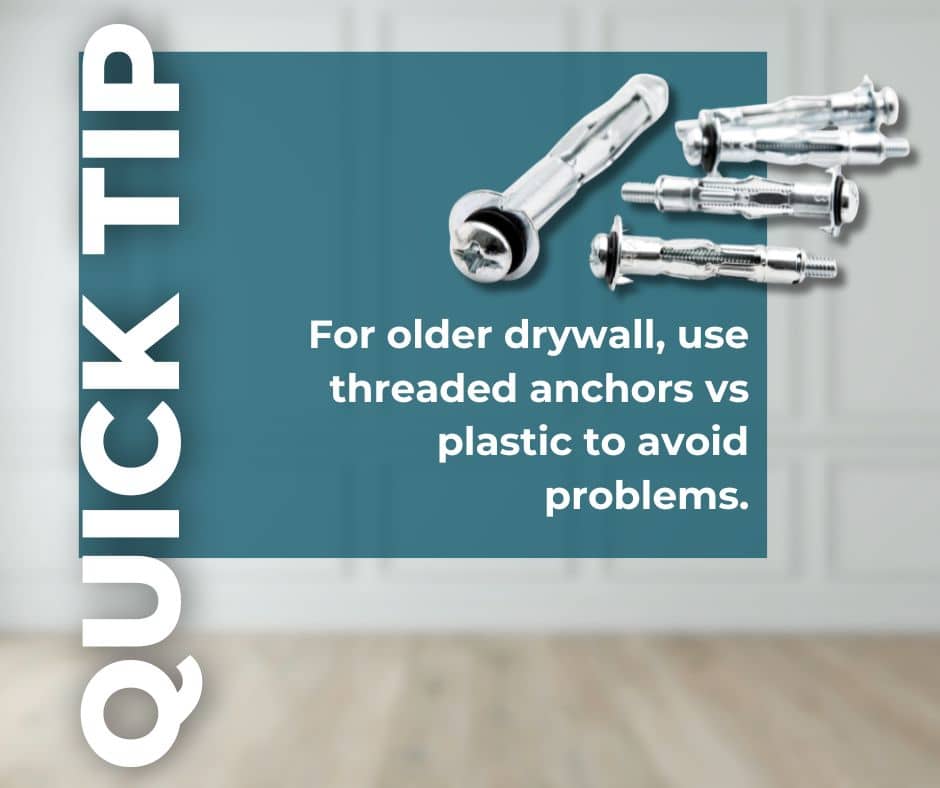
Threaded anchors are self-drilling and do not require a pilot hole, making installation faster. Most are rated for lightweight to medium loads and work well for everyday hanging needs where locating a stud is not practical.
Finding Wall Studs
Before reaching for any anchor, try to locate a stud. Wall studs in standard residential construction are spaced 16 or 24 inches on center. In New Hampshire, Maine, and Massachusetts, where older homes are common, you may encounter irregular stud spacing, particularly in renovated or historical properties.
Reliable Methods for Finding Studs
- Electronic stud finder: the most consistent method; most models detect both edge and center
- Magnetic stud finder: detects the screws or nails used to attach drywall sheets to the framing
- Knock method: tapping along the wall and listening for the shift from hollow to solid
- Measuring from a corner: studs typically begin 15-1/4 inches from a corner, then repeat every 16 inches
Once you locate a stud, mark it clearly before you drill or drive a screw. If your anchor point does not align with a stud, choose an anchor rated for your actual load and follow the manufacturer’s installation instructions carefully to avoid pull-out or drilling errors.
Ceiling Installations Require Extra Caution
Ceiling applications deserve special attention because gravity works directly against the fastener. The weight drywall can hold overhead is significantly less than on walls, and the consequences of failure are more serious.
Key rules for ceiling installations:
- Never use standard nails or drywall screws for ceiling-mounted items
- Always attach ceiling fans, heavy light fixtures, and overhead shelving directly to ceiling joists
- Use a rated ceiling box with blocking for any fixture that exceeds the box’s stated weight capacity
- Expansion anchors are not suitable for ceilings, regardless of the load
Ceiling joists run perpendicular to the floor joists below and are typically spaced 16 to 24 inches apart. Locating them before installation is just as important as finding wall studs, and the same stud finder methods apply.
Related Questions To Explore
Can a home inspection reveal improper wall mounting or drywall damage? Yes. During a home inspection, Alpha Building Inspections evaluates wall and ceiling conditions throughout the home. Signs of pulled-through anchors, patched drywall, or improperly supported ceiling fixtures are documented as part of the overall condition report.
Should I get a pre-listing inspection before selling my New Hampshire or Maine home? A pre-listing inspection is one of the best ways to identify issues before buyers find them. Drywall damage, ceiling fixture concerns, and other deferred maintenance items are far easier and less expensive to address on your own timeline than during a negotiated repair process after an offer comes in.
Does Alpha inspect older homes with plaster walls instead of drywall? Yes. Many older homes throughout New Hampshire, Maine, and Massachusetts have plaster walls rather than gypsum board. Plaster behaves differently under fastener load, holds anchors differently, and requires a different assessment approach. Alpha’s inspectors are experienced with both wall types across the region.
Are drywall and ceiling conditions covered in a new construction inspection? Yes. A new construction inspection evaluates drywall installation, ceiling finishes, and structural connections throughout the home. Issues like improper blocking for ceiling fixtures or drywall installed over uneven framing are among the things inspectors document before you close.
Does Alpha conduct commercial building inspections where drywall weight limits are relevant? Yes. Commercial building inspections cover wall assemblies, ceiling systems, and structural connections throughout the building. Partition wall construction, ceiling grid systems, and mounting hardware concerns are all part of a thorough commercial inspection.
When to Call a Professional
Call a professional installer or contractor if you are hanging anything over 75 pounds, mounting anything to a ceiling, or installing cabinetry or TV mounts where stud placement is uncertain. The repair cost when things go wrong almost always exceeds what professional installation would have cost.
If you are buying, selling, or building a home and want to know the overall condition of walls, ceilings, and structural elements, a home inspection covers all of that.
Alpha Building Inspections serves homeowners across New Hampshire, Maine, and Massachusetts with residential and commercial inspection services built around helping you understand exactly what you are working with.
Conclusion
The difference between a nail and a proper anchor in drywall is not just a technicality. It is the difference between something staying on your wall and something coming down. Understanding your fastener options, locating wall studs when possible, and matching the anchor to the actual weight you are hanging will save you from holes in your walls and damage to everything on them.
When in doubt, go bigger on the anchor, find the stud, or call someone who knows what is behind your walls.
Alpha Building Inspections serves homeowners across NH, ME, and MA. Ready for a home inspection? Schedule yours today.