The honest answer is that you usually cannot tell by looking. Asbestos fibers are microscopic. Asbestos-containing drywall, joint compound, and plaster look identical to materials that contain none. The only way to confirm asbestos in your walls is through laboratory testing.
That said, there are clear risk factors that help inspectors and homeowners know when testing is worth taking seriously. At Alpha Building Inspections, we flag those risk factors on every inspection of older homes across NH, MA, and ME.
The Short Answer: You Usually Cannot Tell by Looking
Asbestos fibers are approximately 1,200 times thinner than a human hair. No visual inspection can confirm their presence or absence. Wall materials that contain asbestos look the same as those that do not: same color, same texture, same finish.
This is one of the most dangerous assumptions homeowners make: that smooth, white, clean-looking drywall or plaster is safe. It may be. It may not be.
The EPA’s guidance on asbestos in the home is direct on this point: if you suspect asbestos-containing materials in your home, do not disturb them. Contact a trained professional for sampling and testing before any renovation work begins.
What you can do without a lab is identify risk factors: the age of the home, the type of wall materials used, and the renovation history. Those factors do not confirm asbestos, but they tell you how seriously to take the question.
Which Homes Are Most Likely to Have Asbestos in the Walls?
The single most useful indicator is the year the home was built.
Pre-1980 Construction
Asbestos was widely used in residential construction from the 1930s through the late 1970s. Joint compound containing asbestos was sold at hardware stores in buckets and 25-pound powder bags throughout this period.
If your home was built or last renovated before 1980, assume there is a reasonable chance asbestos is present in some wall material until testing proves otherwise.
Homes built between 1980 and 1985 fall in a gray zone. Asbestos use declined sharply after 1978 but was not fully eliminated from drywall products until the mid-1980s. Warehoused materials sometimes ended up in homes built as late as 1982 or 1983.
Homes built after 1985 are considered low risk for asbestos in wall materials, though other components of the home (pipe insulation, flooring adhesives, roofing) may still warrant a closer look.
New England’s housing stock skews older than the national average. A large share of homes in New Hampshire, Massachusetts, and Maine were built well before 1980, which puts this region at higher exposure risk than newer markets in the South or West.
Renovation History Matters Too
A home built in 1990 is not automatically safe if it was renovated in 1975. Conversely, a home built in 1965 may have had wall materials professionally removed and replaced. The renovation history of a property is just as important as the original build date.
If records are unavailable (which is common in residential properties), testing is the only reliable answer.
Where Exactly Does Asbestos Hide in Walls?
Asbestos does not appear uniformly throughout a wall. It concentrated on specific materials depending on the era and type of construction.
Joint Compound and Drywall Mud
This is the highest-risk wall material in homes built between the 1940s and early 1980s. Joint compound (the paste used to cover seams between drywall panels, fill nail holes, and smooth surfaces) commonly contained up to 6% asbestos fiber during this period.
It was applied at every joint, often skim-coated over entire wall surfaces for texture, and sanded smooth after drying.
That last step matters. Sanding joint compound is one of the highest-risk activities in renovation work because the compound is inherently friable: it can be crushed to powder by hand, and sanding sends fine dust into the air.
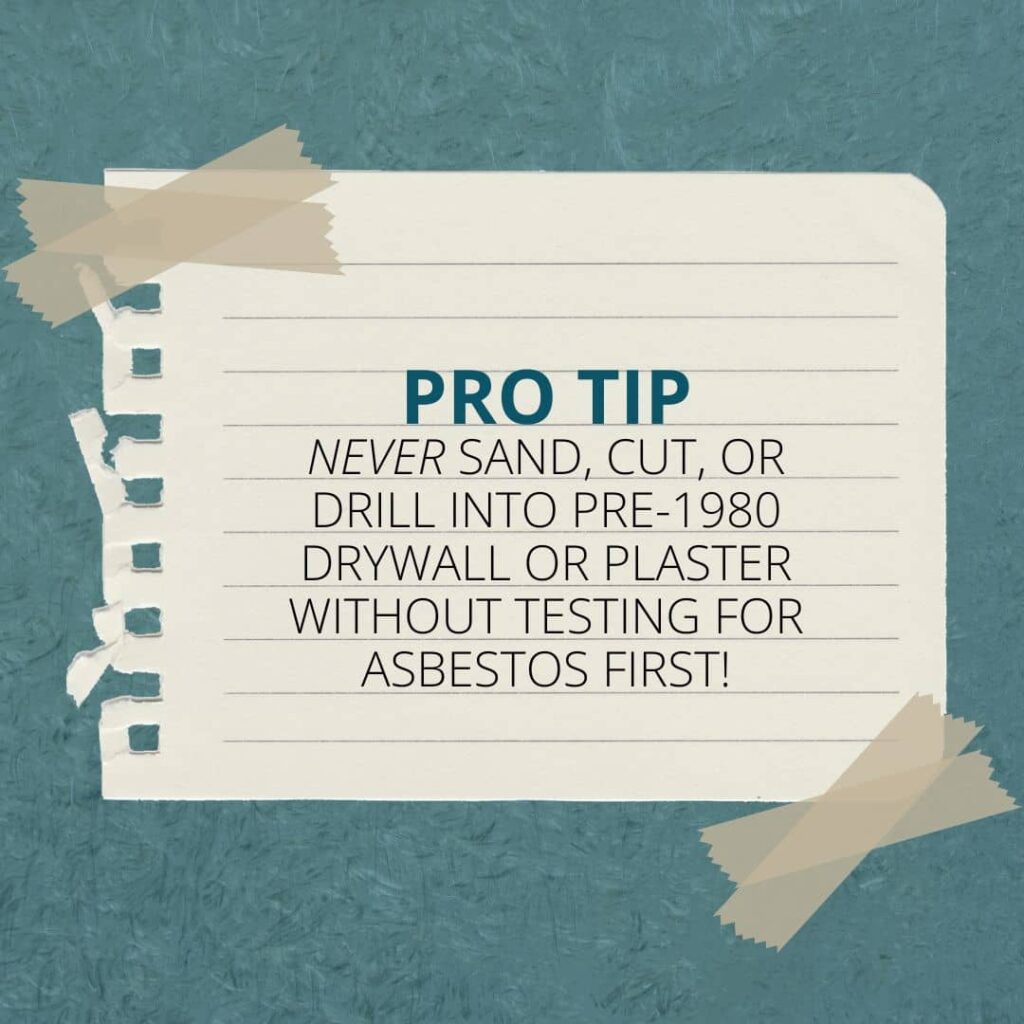
Any renovation that involves sanding, cutting, or drilling into pre-1980 drywall walls (even something as minor as hanging a heavy picture) can disturb asbestos-containing joint compound.
Plaster Walls
Older homes, particularly those built before the 1940s, when drywall became the dominant wall material, typically have plaster applied over wood lath. Asbestos was added to plaster starting in the 1920s for fire resistance and strength.
If your home is old enough to still have original plaster walls, assume asbestos may be present until tested. For more on what inspectors find in older New England homes, see our post on what to expect from a home inspection as a buyer or seller.
Wall Insulation
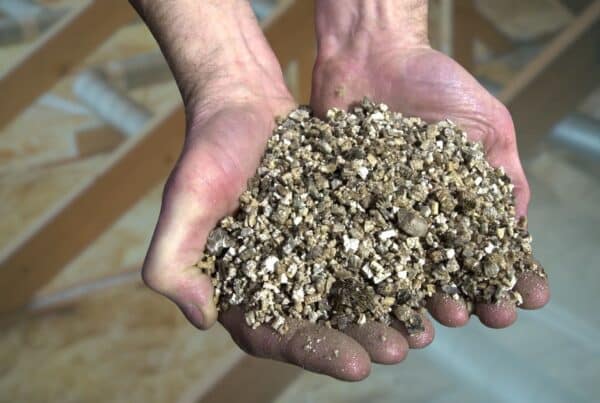
Houses built between 1930 and the 1970s may have asbestos-containing insulation inside the wall cavities, particularly vermiculite-based products. Vermiculite insulation sold under the brand name Zonolite is known to be contaminated with asbestos, as most of it came from a single mine in Libby, Montana, that operated until 1990.
This insulation is not visible without opening walls, but its presence is a known risk in homes of this era.
Textured Wall Finishes and Patching Compounds
Spray-on and trowel-on textured wall finishes were popular in homes built from the 1950s through the 1970s. Many of these products contained asbestos for fire resistance and soundproofing. Patching compounds used to repair holes and surface damage during this era also commonly included asbestos.
Per CPSC guidance on asbestos in the home, the use of asbestos in patching compounds and textured paints was banned in 1977, but materials manufactured before that date remained in use for years afterward.
What Do Inspectors Look For?
A standard home inspection does not include asbestos testing, and inspectors are not licensed asbestos abatement professionals. But experienced inspectors know what to flag.
Visual Risk Indicators
During an inspection, we note conditions that raise the probability of asbestos-containing materials:
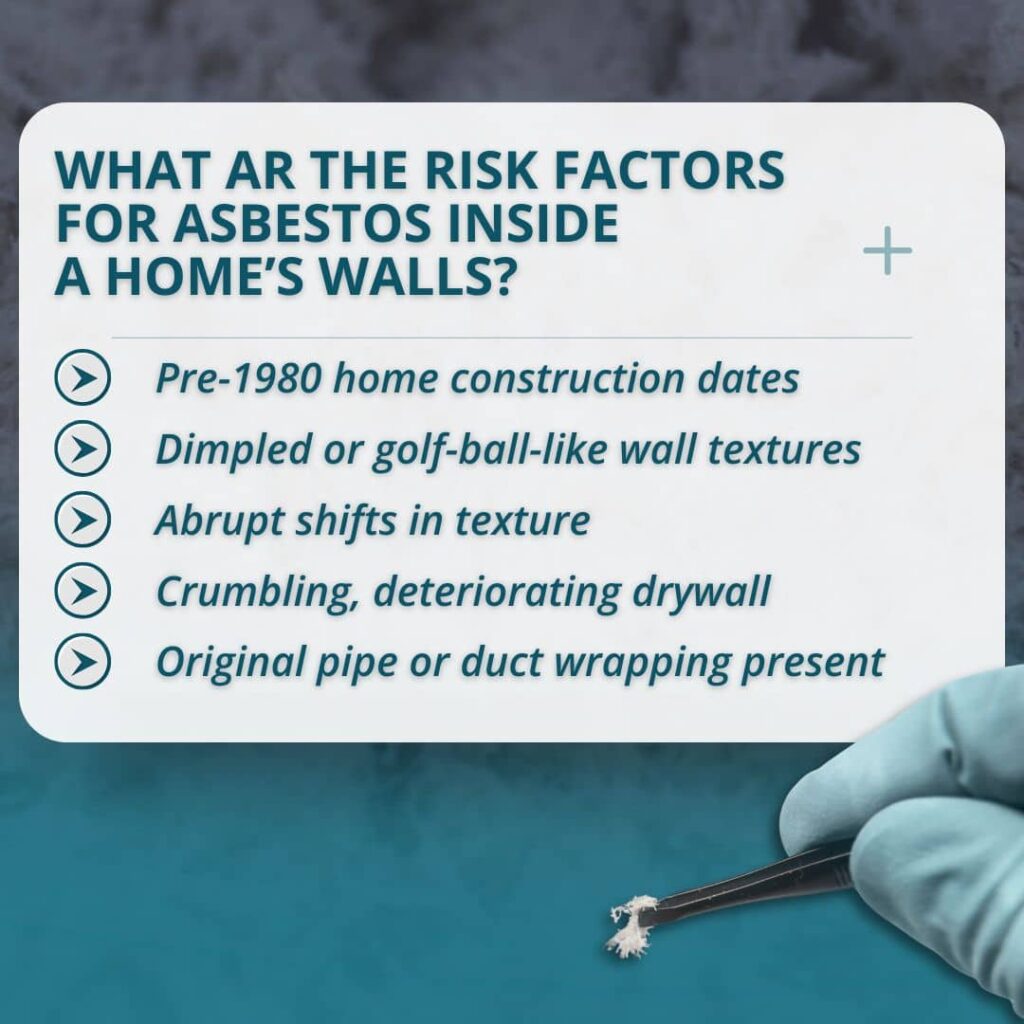
- Home age: Any home built before 1980 triggers heightened awareness
- Wall surface texture: Dimpled or golf-ball-like texture on walls can indicate textured finishes from the asbestos era
- Patch inconsistencies: Areas where wall texture or color shifts abruptly often indicate older asbestos-containing joint compound used in repairs
- Damaged or crumbling wall surfaces: Deteriorating plaster or drywall, especially near pipe penetrations or in basements, is at a higher risk because damaged material is more likely to release fibers
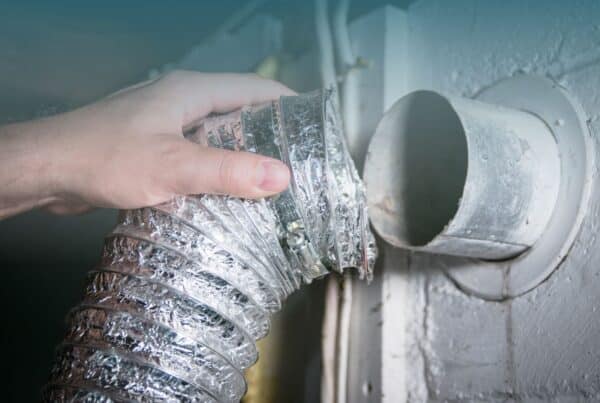
- Visible pipe insulation or HVAC duct wrap: While not wall material itself, the presence of original pipe insulation in the walls or basement is a strong indicator that other asbestos-containing materials may be present
What a Standard Home Inspection Covers (and Does Not)
A standard home inspection evaluates visible conditions of major systems, including interior walls, ceilings, and floors. Inspectors note damage, deterioration, and conditions that warrant further investigation.
What they do not do is collect wall samples or perform air quality testing for asbestos. That requires a separate, licensed asbestos inspector.
If an inspector flags concerns during a standard inspection, the next step is to bring in a certified asbestos professional. Alpha’s existing post on whether home inspections check for asbestos walks through exactly what that process involves and who the right professionals are.
What Should You Do If You Suspect Asbestos in Your Walls?
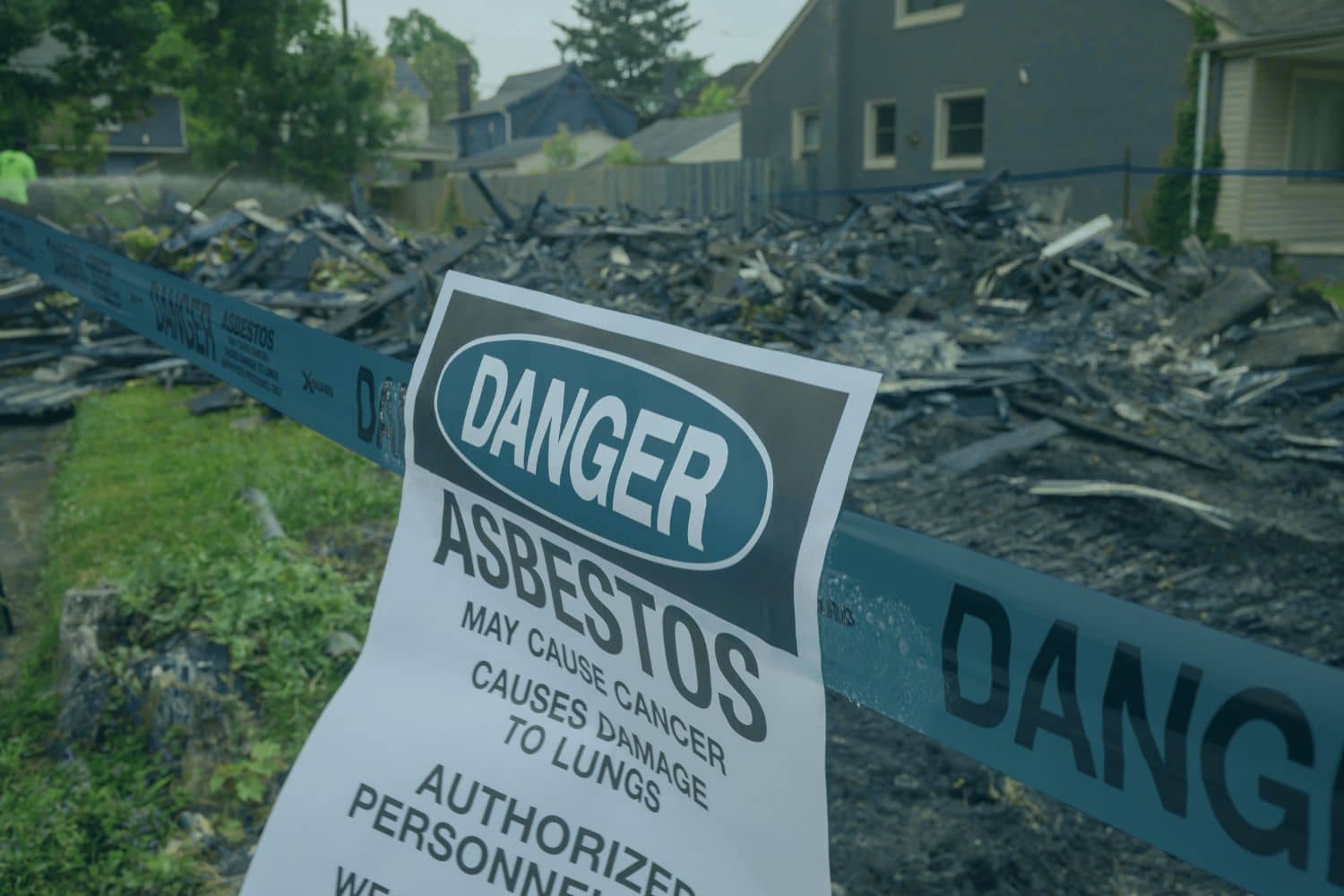
The most important rule: do not disturb the material. Asbestos-containing walls that are intact and undamaged do not pose an active health threat. The danger begins when fibers become airborne through cutting, drilling, sanding, or demolition.
If you are buying an older home and want to know what you are dealing with:
- Request any available renovation records from the seller
- Schedule a home inspection with an inspector who flags asbestos risk factors
- If warranted, hire a certified asbestos inspector to collect and test wall samples. Do not collect samples yourself
- Review results before making any renovation plans
If you already own an older home and are planning renovations:
- Identify every wall area you plan to disturb
- Have those specific areas tested before work begins
- If asbestos is confirmed, hire a licensed abatement contractor (not a general contractor) to handle removal or encapsulation
Related Questions to Explore
Can you live in a home with asbestos in the walls? Yes, in most cases. Asbestos-containing materials that are intact and undisturbed do not release fibers into the air. Many older homes across New England contain some asbestos-containing materials that never need to be touched. The risk is renovation, not occupancy.
Does asbestos in walls have to be removed? Not always. Encapsulation (sealing the material to prevent fiber release) is sometimes a safer option than removal, which carries its own risk of fiber release if done improperly. A licensed asbestos professional can assess the condition of the material and recommend the right approach.
Is it safe to drill into walls that might have asbestos? No, not without testing first. Drilling into asbestos-containing joint compound or plaster releases fibers. Even a single hole for a wall anchor can disturb enough material to be a concern. Test before you drill if the home predates 1980.
When to Call a Professional
Call a professional before any of the following in a pre-1980 home:
- Renovation work that involves sanding, cutting, or removing wall materials
- A home purchase where the inspection flagged deteriorating wall surfaces or original pipe insulation
- A basement or attic conversion that requires opening walls
- Any situation where a wall surface is crumbling, water-damaged, or visibly disturbed
Alpha Building Inspections serves buyers, sellers, and homeowners throughout NH, MA, and ME. A standard home inspection includes a walkthrough of interior wall conditions and flags visual risk factors that may warrant asbestos testing.
We have completed over 11,000 inspections across New England and can tell you what is worth investigating further. Schedule online and save $25 with code SAVE25.
Conclusion
Here is the short version:
- You cannot confirm asbestos in walls visually: lab testing is the only reliable method
- Homes built before 1980 carry meaningful risk, particularly in joint compound, plaster, and wall insulation
- Intact, undisturbed asbestos-containing walls are not an active hazard; the risk comes from renovation
- A home inspection flags visual risk factors; a certified asbestos inspector handles sampling and testing
If you are buying or renovating an older home in New England, do not guess. Schedule an inspection with Alpha and know what you are working with before work begins.