Lights flickering in your house can feel like a small inconvenience, but they often point to something that needs attention.
Some causes are simple, such as a bulb that needs tightening. Others can signal worn fixtures, overloaded circuits, or wiring issues. When you are preparing to buy or sell a home, flickering lights are a sign you should explore early.
In New England, flickering is especially common because homes experience wide temperature swings, long heating seasons, and older construction styles.
This guide explains the most common reasons lights flicker, what homeowners can check safely, and when an inspector should evaluate the electrical system.
A Quick Look at the Most Common Causes
Here is a simple comparison to help you understand what might be happening in your home.
| Cause | Harmless or Serious | What You May Notice |
| Loose bulb | Harmless | Flickers when bumped or randomly |
| Old or failing light fixture | Sometimes serious | Buzzing, dimming, or flickers while still on |
| Dimmer switch not LED compatible | Harmless | Pushing, pulsing, or flashing on dim settings |
| Overloaded circuit | Moderate concern | Lights dim when appliances turn on |
| Loose wiring | Serious | Widespread flickering and warm outlets |
| Aging electrical panel | Serious | Frequent tripping or visible wear |
This table helps set expectations, but a full inspection is the best way to understand the true cause.
Loose or Incorrect Bulbs
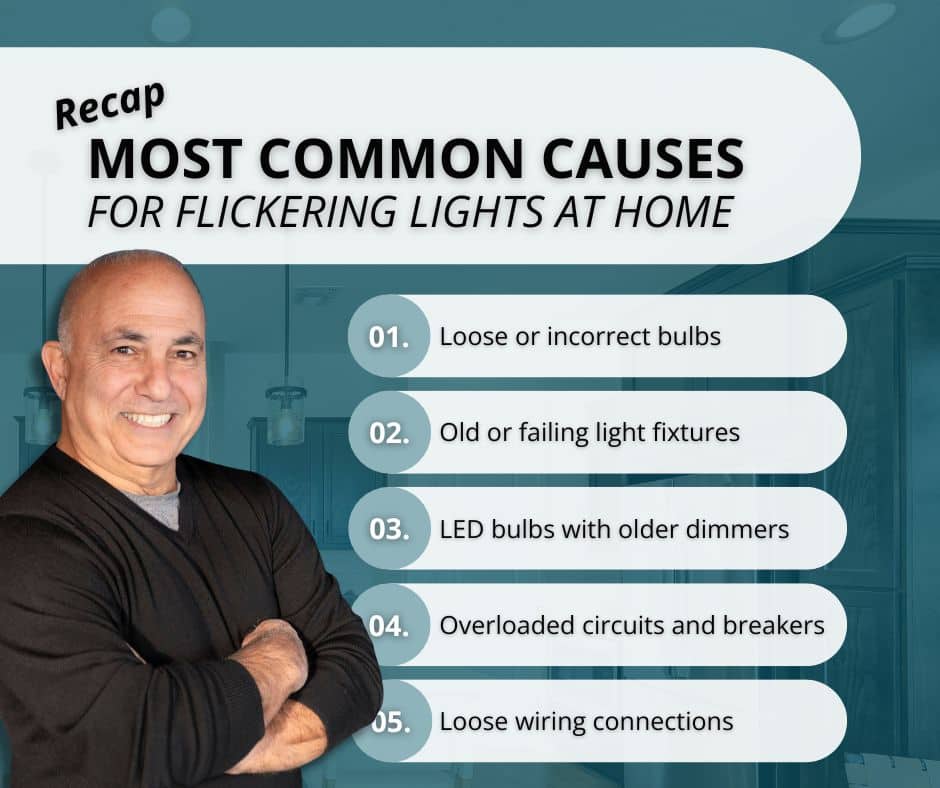
Loose bulbs are one of the easiest causes to fix. If a bulb is not fully screwed into the socket, it may lose contact and begin flickering anywhere in the house.
Check for:
- Bulbs that wiggle or turn easily
- Bulbs not designed for the fixture
- Damaged bases
- Flickering only when the fixture is touched
Replacing or tightening the bulb often solves the issue.
Failing or Outdated Light Fixtures
Older fixtures found in many New England homes can loosen internally or show signs of wear after years of use. Fixtures in bathrooms, basements, and attics tend to wear out faster due to humidity.
Common signs include:
- Flickering when the fixture moves
- Warm or buzzing switches
- Light dimming or flashing without reason
If the fixture is old or unreliable, replacement may be needed. A home inspection can help determine whether the flicker comes from the fixture or another part of the system.
Dimmer Switch Compatibility Problems
Many older dimmer switches do not work with modern LED bulbs. When they are paired together, flickering is very common.
Signs include:
- Flickering at lower settings
- Flashing when dimmers are turned on
- A faint humming sound from the switch
Replacing the dimmer with an LED-compatible option usually solves the problem.
When Flickering Points to a Bigger Electrical Issue
Not all flickering is harmless. Some causes deserve prompt attention because they may relate to system performance or safety.
Overloaded Circuits
Lights that flicker when appliances turn on may point to an overloaded circuit. Major appliances such as microwaves, air conditioners, space heaters, dryers, and sump pumps are common triggers.
The U.S. Energy Information Administration reports that average household energy use has increased significantly over the last two decades as families rely on more appliances and electronics.
This means older homes may struggle to support today’s electrical load.
If flickering happens every time a large appliance starts up, it may be time to evaluate the circuit.
Loose Wiring Connections
Loose wiring is one of the most serious causes of flickering lights in a house because it can heat up over time.
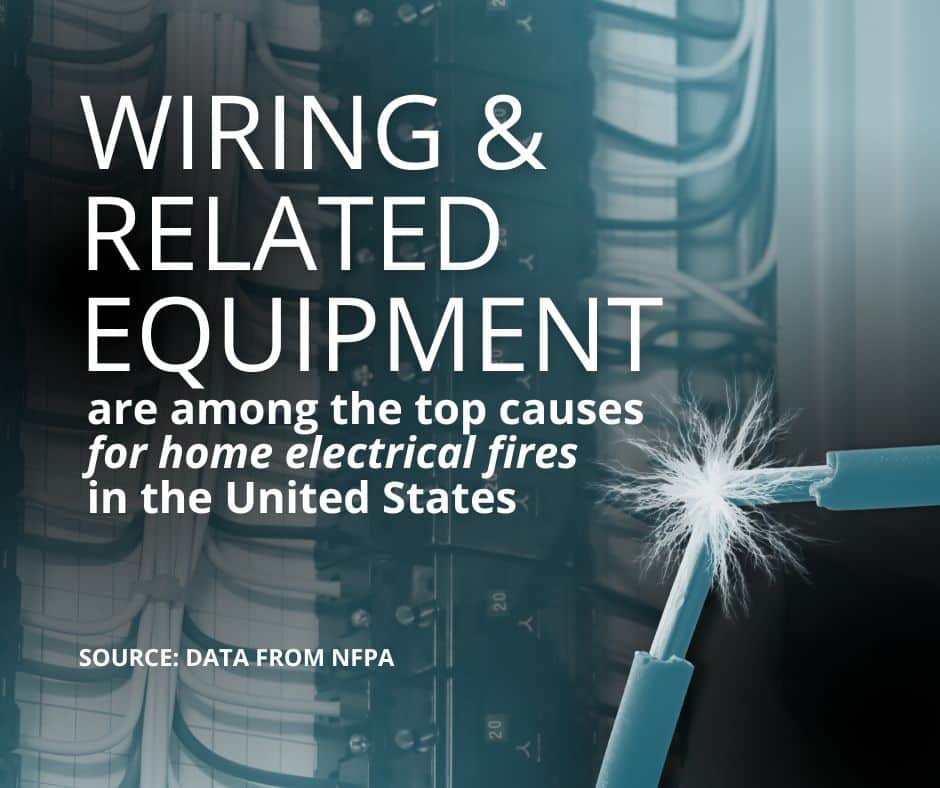
The National Fire Protection Association reports that wiring and related equipment are among the top causes of home electrical fires in the United States.
Possible signs of loose connections include:
- Widespread flickering
- Breakers that trip repeatedly
- Outlets that feel warm
- Buzzing or crackling sounds
An inspection can reveal visible signs of heat damage, corrosion, or loose connections at accessible locations.
Aging Electrical Panels
Many homes in New Hampshire, Massachusetts, and Maine still rely on older electrical panels that were installed decades ago. These panels may not support modern electrical needs or may show signs of degradation.
Issues may include:
- Rust or moisture inside the panel
- Overheated breakers
- Mixed wiring types
- Flickering across multiple circuits
Older panels face more strain during winter months when heating equipment increases electrical demand.
Voltage Fluctuations
Voltage swings can make lights suddenly brighten or dim. These swings can be caused by problems inside the home or by issues with the utility connection.
The U.S. Department of Energy notes that voltage variations can shorten the life span of major appliances. If you notice lights brightening unexpectedly, this is something worth checking.
Why Does Flickering Matter During a Home Sale or Purchase?
Flickering lights often appear during prep for a house sale. Buyers want a full picture of the home’s condition, and sellers want to avoid delays or unexpected findings.
A flickering light may:
- Raise concerns about electrical safety
- Signal older components that need evaluation
- Suggest overloaded circuits
- Reveal fixture age or wear
- Point to moisture or temperature-related problems in attics or basements
Since electrical issues can affect insurance and negotiation, identifying the cause early helps both buyers and sellers move forward confidently.
How Might a Home Inspector Evaluate Flickering?
A home inspector cannot open walls or perform electrical repairs, but they can evaluate visible signs and test basic function. When flickering is reported, inspectors focus on areas they can safely access.
Inspectors may:
- Confirm fixtures and switches work correctly
- Review the electrical panel for age and condition
- Look for signs of heat, corrosion, or rust
- Test outlets for proper polarity
- Identify areas that need review by a licensed electrician
- Document any unsafe or damaged components
- Review attic and basement wiring where visible
This approach gives buyers and sellers clear information about what may be causing the flicker and what next steps might be required.
When to Address Flickering Before Listing a Home
Sellers often want to tidy up small issues before listing a property.
While you do not need major electrical work unless it is required for safety, addressing simple causes can leave fewer questions during the inspection.
Good steps include:
- Replacing bulbs with new, matching LED bulbs
- Removing old or buzzing fixtures
- Cleaning dust from recessed fixtures
- Securing outlets or switches that feel loose
- Ensuring dimmers are LED compatible
If flickering continues after these steps, a home inspection can help identify whether the issue is related to older wiring, load concerns, or the panel.
Seasonal Factors in New England
Homes in northern states face constant temperature changes. Expansion and contraction may loosen connections over time.
Basements, crawlspaces, and attics also experience higher humidity during certain seasons.
Common seasonal triggers include:
- Winter heating load pressure on older panels
- Summer use of window AC units
- Humidity affecting fixtures
- Ice and moisture around service connections
- Power fluctuations after storms
These factors can help explain why flickering may appear at certain times of year.
When to Call a Professional
Before your inspector arrives, or before getting help from a professional electrician, a quick self-check of certain components is helpful.
You can safely:
- Tighten bulbs
- Replace old bulbs with matching LEDs
- Check that dimmers are LED compatible
- See whether flickering happens only with certain appliances
- Reset a tripped breaker and confirm it stays engaged
If flickering continues after these simple steps, it is time to involve a professional. Your next step depends on what you are seeing….
When to Call a Home Inspector
Call an inspector when:
- You are buying or selling a home
- Flickering appears in several rooms
- The electrical panel looks aged or worn
- You notice moisture concerns in the basement or attic
- You want a clear, unbiased review of the system
- You need documentation of visible electrical concerns
A home inspector evaluates the visible components, the panel condition, the fixtures, and any signs that suggest deeper electrical issues.
When to Call a Licensed Electrician
Call an electrician when:
- Flickering continues after replacing bulbs or fixtures
- Breakers trip often
- Outlets feel warm or loose
- You notice buzzing or crackling sounds
- Lights brighten or dim unexpectedly
- The inspector recommends further evaluation
Electricians handle the repairs, load evaluations, rewiring, and panel updates that fall outside the scope of a home inspection. They can address the underlying electrical conditions that might be causing the flickering lights in your house.
Other Related Questions Homeowners Often Ask
Can flickering lights be caused by seasonal changes?
Yes. Temperature swings and humidity can affect fixtures, attic wiring, basement wiring, and older connections. Seasonal impacts are common in New Hampshire, Massachusetts, and Maine, especially during long winters.
What problems show up most in unfinished below-grade spaces?
Inspectors often find moisture seepage, efflorescence, loose stone or block walls, poor ventilation, and aging support posts. These early signs help prevent bigger structural or mold issues later.
Is flickering a sign I need to update my electrical panel?
It can be. Widespread flickering, warm breakers, or frequent tripping can point to an aging panel or faulty wiring. Inspectors look for visible signs of wear that help guide next steps.
Conclusion
Flickering lights in a house are common, especially in older New England homes. Many causes are simple, but others deserve attention. A clear inspection helps you understand what is happening, how serious it may be, and what next steps make sense for the home.
If you are preparing to buy or sell a home and want clarity before moving forward, Alpha Building Inspections is here to help.
Schedule your home inspection and get a clear picture of the home’s electrical condition and overall safety.