A toilet has roughly a dozen named parts, and each one has a specific job. Knowing their names and functions helps you spot problems early, communicate clearly with a plumber, and understand what a home inspector is evaluating when they check your bathroom plumbing.
At Alpha Building Inspections, toilet components come up on nearly every home inspection: running toilets, worn flappers, and faulty shut-off valves are among the most common findings. This guide covers every major part, what it does, what breaks first, and when to bring in a professional.
The Two Main Systems: Tank and Bowl
A toilet works as two systems that operate together. The tank sits at the back and stores clean water for each flush. The bowl sits at the front and receives the flush, carries waste through the drain, and holds a small amount of water as a seal against sewer gases.
Most of the moving parts live inside the tank. The bowl and its plumbing are mostly static structures in the porcelain.
Parts Inside the Toilet Tank
Lift the tank lid, and you will find the components that control every flush and refill. These are the parts that wear out most often.
Toilet Handle and Lift Chain
The handle is the lever on the outside of the tank. Pressing it pulls a lift chain attached to the flapper inside. The chain needs about a half-inch of slack. Too tight and the flapper cannot seal properly; too loose and the flush will feel weak or the toilet may run after flushing.
Flapper
The flapper is a rubber disc that sits over the flush valve opening at the bottom of the tank. It holds the water in the tank between flushes. When you press the handle, the chain lifts the flapper, and water rushes into the bowl. After the tank empties, the flapper falls back and seals the opening so the tank can refill.
Flappers are the most toilet part to replace. Chlorine in tap water degrades rubber over time, usually within three to five years. A worn flapper causes a toilet to run continuously, which can waste hundreds of gallons of water per month and damage flooring. Replacing one costs a few dollars and takes about 10 minutes.
Flush Valve and Overflow Tube
The flush valve is the opening at the bottom of the tank that the flapper covers. When the flapper lifts, water flows through this opening and into the bowl to initiate the flush.
The overflow tube is a vertical pipe that runs up from the flush valve. Its job is safety: if the fill valve ever sticks open and water keeps rising, the overflow tube drains it directly into the bowl rather than letting it spill over the tank edge onto the floor.
Fill Valve
The fill valve controls the flow of fresh water into the tank after a flush. It connects to the water supply line at the bottom of the tank and shuts off automatically once the water reaches the correct level. Modern fill valves use a float cup design. Older toilets may have a ballcock, which is a ball on an arm that floats up as the tank fills.
According to the EPA WaterSense Fix a Leak program, a running toilet can waste 200 or more gallons of water per day, making it one of the most expensive household leaks to ignore.
Float
The float signals the fill valve to stop. As the tank fills, the float rises. When it reaches the preset water level, the fill valve closes. If the float is too high, water spills into the overflow tube and the toilet runs. If it is set too low, each flush will be weak. On modern fill valves, the float is built into the valve body and adjusted with a screw or twist collar.
Parts of the Toilet Bowl
The bowl side of the toilet has fewer moving parts. Most of what you see is built directly into the porcelain.
The Bowl and Rim Holes
The bowl is the lower half of the toilet. It holds a standing amount of water, which forms a seal that prevents sewer gases from entering your home. When the tank flushes, water enters the bowl through small rim holes, a row of perforations along the underside of the rim. These holes direct water around the inside of the bowl and initiate the siphon action that clears waste.
Mineral buildup can partially clog rim holes over time, which causes a weak, slow flush. Cleaning them with a wire tool or a diluted cleaning solution usually restores normal flushing.
Trapway
The trapway is the S-shaped or P-shaped channel molded into the base of the toilet. It connects the bowl to the drainpipe below. Water held in the trapway forms the sewer gas seal mentioned above. During a flush, the rush of water from the tank creates a siphoning action in the trapway that pulls waste and water through the drain.
Partial clogs in the trapway are one of the most common bathroom plumbing problems. A clogged trapway causes slow drainage, repeated clogging, or water rising high in the bowl before draining. A plunger handles most trapway clogs. A toilet auger is needed for anything lodged deeper.
Toilet Seat and Lid
The seat and lid attach to the bowl with two plastic or metal hinges. They play no role in flushing. Seats are replaceable and come in standard round or elongated sizes to match the bowl shape.
External Plumbing Parts
Three additional components connect the toilet to your home’s water supply and waste system.
Shut-Off Valve
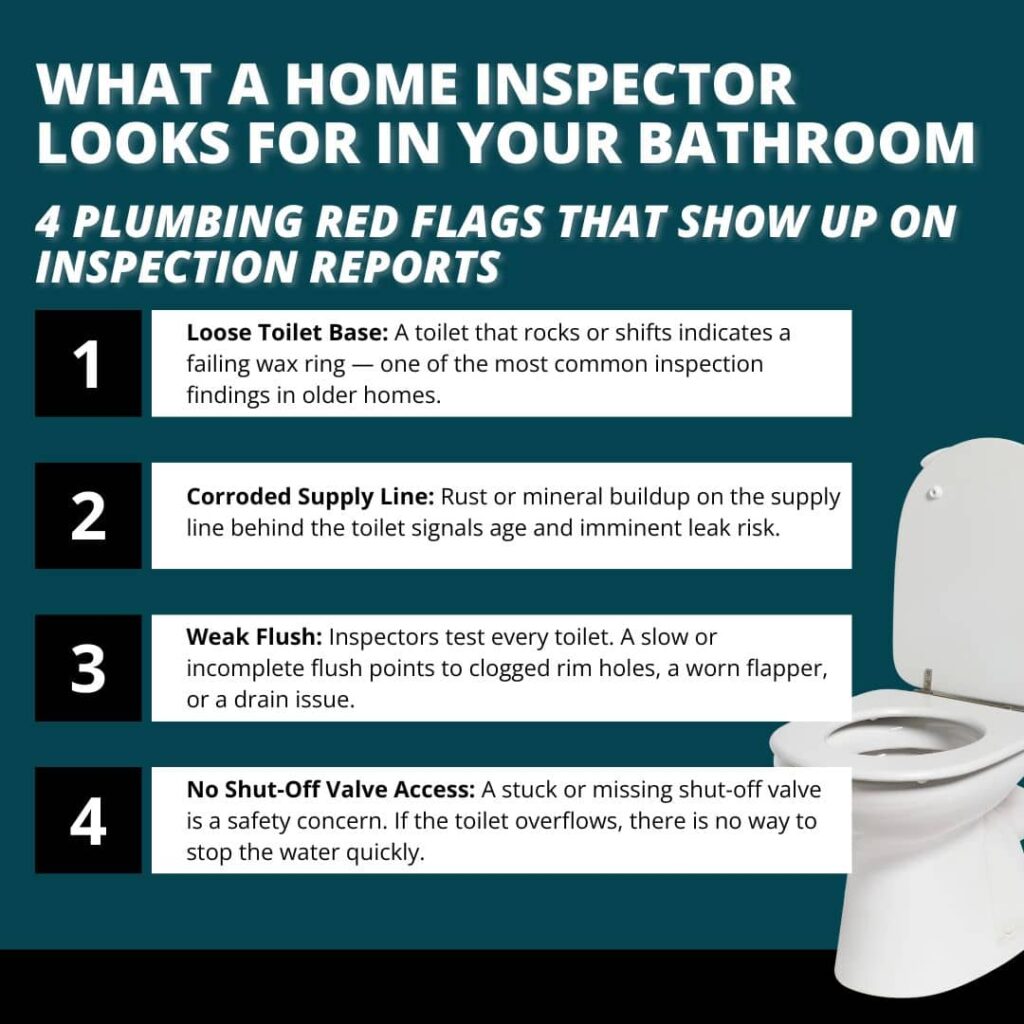
The shut-off valve is the small valve on the wall or floor behind the toilet. Turning it clockwise stops the water supply to the toilet entirely. This is the first thing to know: if a toilet ever overflows or develops a serious leak, closing this valve stops the water immediately. You can find more on related plumbing valve concerns in our post on what causes a toilet to overflow.
Water Supply Line
The supply line is the flexible hose that connects the shut-off valve to the bottom of the fill valve. Most supply lines are braided stainless steel and last many years, but they can corrode or crack over time.
A supply line failure can release water continuously until the shut-off valve is closed. Home inspectors check supply lines for corrosion, bulging, or signs of prior leaking.
Wax Ring and Toilet Flange
The wax ring sits between the base of the toilet and the toilet flange, which is the fitting mounted to the floor over the drainpipe. The wax ring creates a watertight and airtight seal. It prevents wastewater from leaking under the toilet and blocks sewer gases from entering the bathroom through the floor connection.
Wax rings do not typically fail on their own, but they can fail if the toilet rocks or shifts. A toilet that wobbles needs the anchor bolts tightened or replaced. If a wax ring fails, you may see water pooling at the base of the toilet after a flush or notice a sewer smell in the bathroom.
Replacing a wax ring requires removing the toilet and resetting it, which is a job best left to a licensed plumber. For more on how toilet water connects to your home’s drain system, see our post on where toilet water goes after you flush.
How All the Parts Work Together
Here is the full flush cycle from start to finish:
- You press the handle, which pulls the lift chain and raises the flapper.
- Water rushes from the tank through the flush valve and into the bowl via the rim holes.
- The water flow creates a siphon effect in the trapway, pulling waste through the drain.
- The flapper drops back and seals the flush valve once the tank empties.
- The fill valve opens, refilling the tank with fresh water.
- The float rises as the water level climbs.
- When the water reaches the set level, the float triggers the fill valve to close.
- The toilet is ready for the next flush.
The whole cycle takes roughly one to three minutes, depending on water pressure and the age of the fill valve.
Common Problems by Part
| Part | Common problem | Typical fix |
| Flapper | Running toilet, water seeping into bowl | Replace flapper ($5–15, DIY) |
| Fill valve | Toilet runs or refills slowly | Adjust or replace fill valve ($15–30, DIY or plumber) |
| Float | Water level too high or too low | Adjust float height (DIY) |
| Lift chain | Toilet won’t flush or flushes weakly | Adjust chain length (DIY) |
| Rim holes | Weak flush, slow fill of bowl | Clean rim holes with wire or vinegar (DIY) |
| Shut-off valve | Valve is stuck or corroded | Replace valve (plumber) |
| Supply line | Slow drip at base of tank | Replace supply line ($10–20, plumber recommended) |
| Wax ring | Water at base of toilet, sewer smell | Remove and reset toilet with new wax ring (plumber) |
| Trapway | Clogs, slow drain | Plunger or auger (DIY); persistent clogs = plumber |
InterNACHI, the International Association of Certified Home Inspectors, includes plumbing and toilet condition in its residential Standards of Practice: inspectors are required to report damaged toilets, loose floor connections, active leaks, and tank components that do not operate.

Related Questions to Explore
What are the parts inside a toilet tank?
The inside of a toilet tank contains the fill valve, float, flapper, flush valve, overflow tube, lift chain, and trip lever. The fill valve and float work together to control the water level. The flapper and flush valve control the release of water into the bowl when you flush.
What is the part at the bottom of the toilet called?
The base of the toilet is called the pedestal or base. Underneath it is the toilet flange, mounted to the floor, which connects to the drainpipe. Between the base and the flange is the wax ring, which creates a watertight seal to prevent leaks and block sewer gases.
What does the flapper in a toilet do?
The flapper is a rubber seal that covers the flush valve opening at the bottom of the tank. It holds the water in the tank between flushes. When you press the handle, the lift chain raises the flapper, releasing water into the bowl to create a flush. The flapper then falls back to seal the opening so the tank can refill.
What causes a toilet to keep running?
A toilet that runs continuously after flushing usually has one of three causes: a worn or misaligned flapper that is not sealing properly, a float set too high so water spills into the overflow tube, or a fill valve that will not fully close. Our post on what causes a toilet to overflow covers related issues that can affect toilet water control.
How does a toilet flush?
Pressing the handle pulls the lift chain, which raises the flapper off the flush valve. Water rushes from the tank into the bowl through the rim holes, creating a siphon effect in the trapway that clears waste into the drain. The flapper then drops back, the fill valve opens, and the tank refills for the next flush.
How do I know which toilet part is broken?
Start with the symptom. A running toilet points to the flapper, float, or fill valve. A weak or incomplete flush usually means a clogged trapway or rim holes, or a flapper chain that is too loose. Water at the base of the toilet after flushing suggests a wax ring failure. A toilet that fills very slowly often has a restricted fill valve or partially closed shut-off valve. For plumbing concerns in a home you are buying or selling, a full home inspection from Alpha Building Inspections covers all visible plumbing conditions.
When to Call a Professional
Most toilet repairs involving the flapper, lift chain, or float adjustment are straightforward DIY tasks that require no tools beyond what most homeowners already have. For those, the fix is often a $5 part and 15 minutes.
Call a licensed plumber when:
- The shut-off valve is stuck or corroded. Forcing a stuck valve can break the supply line or the valve body.
- The wax ring has failed. Replacing a wax ring means removing the toilet, which requires some skill to do without cracking the base.
- The toilet rocks or has shifted. A rocking toilet can break the wax ring seal and damage the floor flange underneath.
- The supply line is leaking at the wall connection. This involves the main supply line and can escalate quickly.
- Clogs do not respond to a plunger or auger. Persistent clogs sometimes indicate a deeper issue in the drain line or vent stack.
If you are buying or selling a home in New Hampshire, Maine, or Massachusetts, a professional home inspection will document the condition of your plumbing, including the toilet, supply lines, shut-off valves, and visible drain connections. Alpha Building Inspections has been serving New England homeowners since 2004. Schedule your inspection at alphabuildinginspections.com.
Conclusion
A toilet has fewer parts than most homeowners expect, and most of those parts are inexpensive and replaceable. Here is a quick recap:
- Tank parts (flapper, fill valve, float, flush valve, lift chain) handle the flush cycle and wear out over time.
- Bowl parts (rim holes, trapway) are built into the porcelain and mainly require cleaning, not replacement.
- External parts (shut-off valve, supply line, wax ring, flange) connect the toilet to your home’s plumbing and should be inspected if you notice leaks, rocking, or a sewer smell.
Knowing these parts by name helps you diagnose small problems before they become expensive ones. If you are buying a home and want a licensed inspector to assess your plumbing, contact Alpha Building Inspections to schedule a home inspection in NH, ME, or MA.