This guide explains how to hang a TV on the wall without damaging it, while protecting your home’s structure, finishes, and long-term value. The goal is not just a clean-looking install today, but avoiding cracked walls, failed anchors, electrical issues, or problems that could surface during a home inspection later.
Hanging a TV on the wall can instantly modernize a room, improve viewing comfort, and free up valuable floor space. For many homeowners, it feels like a straightforward DIY project. Drill a few holes, mount the bracket, and you’re done.
In reality, improper TV mounting is a common source of wall damage, hidden safety hazards, and future inspection red flags, especially in homes throughout Massachusetts, New Hampshire, and Maine. Older construction styles, plaster walls, uneven framing, and concealed wiring all increase the risk when the job is rushed or done without the right preparation.
Why TV Mounting Damage Is More Common Than Homeowners Think
Wall-mounted TVs regularly show up in inspection reports, not because TVs are a problem, but because of how they are installed.
According to consumer safety data and inspection trends, the most common TV-related issues include:
- Drywall anchors pulling out over time
- Cracked plaster around mounting points
- Improper fasteners in load-bearing walls
- Damaged electrical wiring behind the wall
- Wall repairs that were cosmetically patched but structurally weak
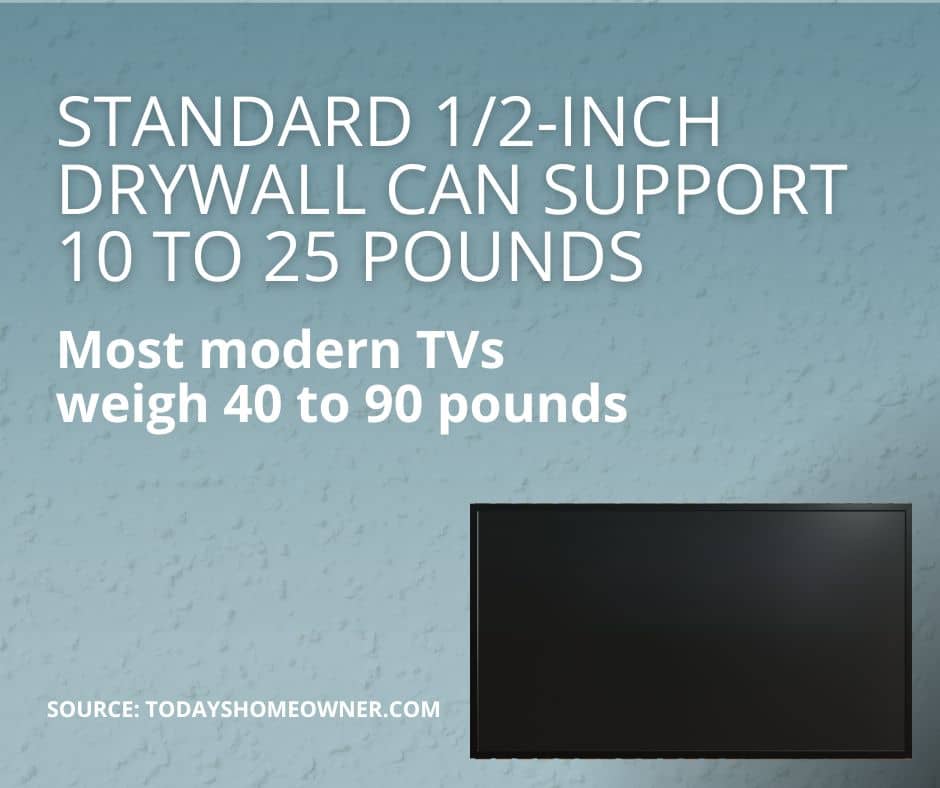
Large TVs now commonly weigh 40 to 90 pounds without the mount, and full-motion mounts can multiply stress on fasteners when the TV is pulled away from the wall. Over time, that stress can cause anchors to loosen, studs to split, or plaster to fracture.
From an inspection standpoint, poorly mounted TVs are often removed before a sale, revealing damage that homeowners did not realize was there.
Understand Your Wall Type Before You Drill
The single biggest factor in avoiding damage is knowing what kind of wall you are working with. Homes across New England vary widely by age, and wall construction is not uniform.
Drywall With Wood Studs
This is typical in newer construction and many remodeled homes.
- Studs usually spaced 16 inches apart
- Drywall alone cannot support a TV
- Mount must be anchored directly into studs
This setup is the most forgiving, but only when studs are correctly located and fasteners are properly sized.
Plaster and Lath Walls
Very common in older homes throughout Massachusetts and parts of New Hampshire and Maine.
- Plaster is brittle and cracks easily
- Lath spacing varies and may not align with modern mounts
- Studs are often irregularly spaced
Plaster walls require slower drilling, proper pilot holes, and often a mounting plate that distributes weight across multiple studs.
Masonry or Concrete Walls
Often found in basements, coastal homes, or older foundations.
- Requires masonry drill bits
- Uses concrete anchors or sleeve bolts
- Dust control and depth accuracy are critical
Improper anchors in masonry can fail suddenly rather than gradually.
Choose the Right TV Mount for Your Home and Wall
The type of mount you choose directly affects how much stress is placed on your wall.
Fixed Mounts
- Sit close to the wall
- Apply minimal leverage force
- Best option for older walls or heavier TVs
Tilting Mounts
- Allow vertical angle adjustment
- Moderate wall stress
- Useful for higher installs above fireplaces
Full-Motion or Articulating Mounts
- Extend outward and swivel
- Create the highest load stress
- Require perfect stud placement and heavy-duty fasteners
In older New England homes, fixed or low-profile tilting mounts are usually the safest choice. Full-motion mounts can be used, but only when studs are confirmed and reinforcement is adequate.
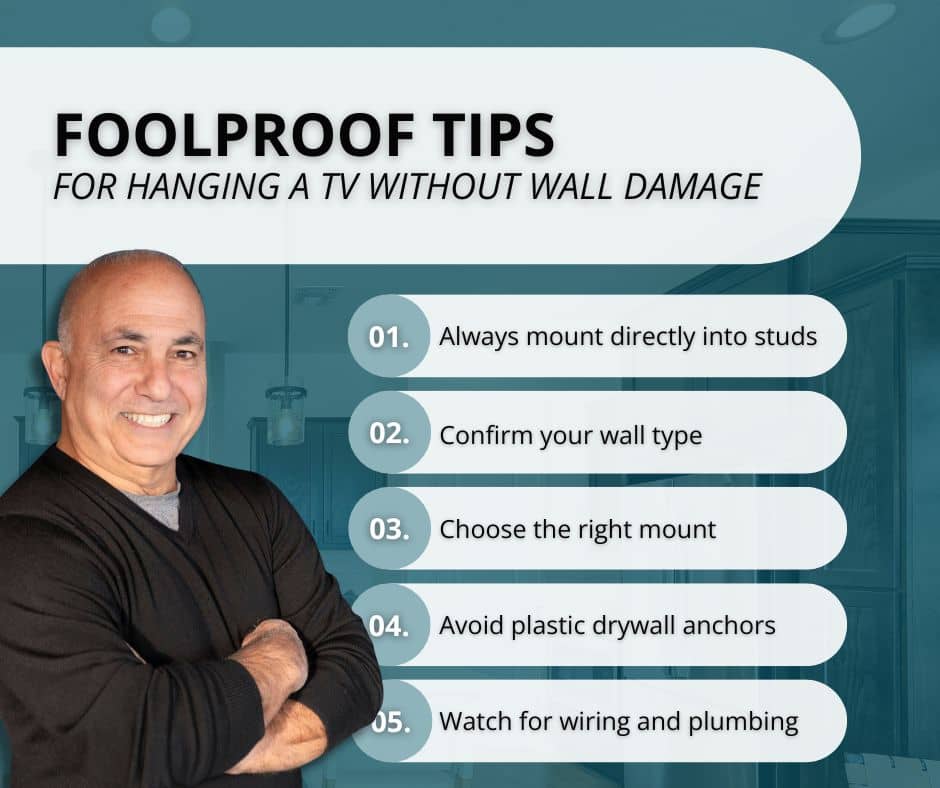
Always Mount Into Studs, Not Just Drywall
Drywall anchors are not designed to handle long-term dynamic loads. Even anchors rated for high weight can fail over time when movement is involved.
Best practices:
- Use a quality stud finder with deep scan mode
- Confirm stud location with measurements and pilot holes
- Use lag bolts sized appropriately for the mount
- Never rely on anchors alone for full TV weight
In homes with plaster walls, stud finders are less reliable, which is why careful measuring and confirmation drilling is essential.
Proper Height and Placement Prevent Future Wall Repairs
Mounting height mistakes often lead to unnecessary re-drilling later.
General guidance:
- TV center should be near seated eye level
- Bedrooms may be slightly higher than living rooms
- Avoid mounting too high above fireplaces unless designed for it
Drilling once and placing the TV correctly the first time avoids patching, repainting, and weakened wall areas.
Avoid Hidden Electrical and Plumbing Damage
Drilling into a wall without understanding what’s behind it is one of the most expensive mistakes homeowners make.
Behind-wall risks include:
- Electrical wiring running vertically or horizontally
- Plumbing lines near bathrooms or kitchens
- HVAC ducts in exterior walls
Older homes may not follow modern wiring paths, which increases risk. Shutting off power to nearby circuits and drilling shallow pilot holes helps reduce danger.
From an inspection perspective, damaged wiring hidden behind walls is a serious concern, even if the TV mount looks fine from the outside.
Use the Right Hardware Every Time
Using incorrect hardware is a leading cause of mount failure.
| TV Size | Recommended Fasteners | Notes |
| Under 50 inches | 5/16-inch lag bolts | Stud mounting required |
| 50–70 inches | 3/8-inch lag bolts | Reinforced mount recommended |
| 70+ inches | 3/8-inch or larger | Professional install advised |
Always follow the mount manufacturer’s specifications and never substitute screws or bolts.
Cable Management Without Wall Damage
Many homeowners want a clean, cord-free look, but improper cable routing causes wall damage and inspection issues.
Safer options include:
- Paintable surface-mounted raceways
- In-wall rated cable kits designed for TVs
- Power outlets installed by a licensed electrician
Running power cords inside walls without proper ratings is a common inspection defect and a fire hazard.
Why TV Mounting Matters During a Home Inspection
Wall-mounted TVs are often removed before a home sale, revealing:
- Enlarged or misaligned holes
- Cracked plaster hidden by the mount
- Loose anchors
- Unrepaired structural damage
Home inspectors frequently document these issues because they indicate improper modifications and potential hidden defects.
For buyers, poorly repaired mounting damage can raise concerns about other DIY work throughout the home.
How Proper TV Mounting Connects to Overall Home Care
Hanging a TV may seem minor, but it reflects broader home maintenance habits. Inspectors look for patterns. One rushed installation can suggest other shortcuts.
Professional inspections evaluate:
- Wall integrity
- Structural attachment methods
- Electrical safety
- Quality of repairs
This is especially important in older New England homes, where small mistakes can lead to larger, more expensive issues.
Other Related Questions
Are drywall anchors ever acceptable?
Only for very small, lightweight displays. Most TVs require stud mounting.
Should I remove the TV before a home inspection?
Yes. Inspectors need to see the wall condition and attachment points clearly.
Is mounting above a fireplace risky?
It can be. Heat exposure, wiring paths, and mounting height must all be carefully evaluated.
When It Makes Sense to Call a Professional
In some situations, hanging a TV is more than a simple DIY task. Calling a professional or scheduling a home inspection can help prevent hidden damage and future repair issues.
You should consider professional guidance if:
- Your home has plaster walls, older framing, or irregular stud spacing common in many MA, NH, and ME homes
- The TV mount is being installed near electrical wiring, plumbing, exterior walls, or a fireplace
- You are buying or selling a home and want to document wall condition before or after removing a mounted TV
- There are existing holes, cracks, or previous mounting repairs in the wall
- A large or full-motion mount is planned, which places more stress on wall framing
A professional home inspection can identify wall, structural, and electrical concerns related to TV mounting and help homeowners avoid problems that may surface later during a real estate transaction or routine maintenance review.
Conclusion
Hanging a TV on the wall without damaging it is absolutely possible, but only when the wall type, mounting method, and long-term impact are properly considered. In New England homes, especially older ones, taking shortcuts often leads to cracks, loose mounts, or inspection issues down the road.
If you are planning upgrades, preparing for a home sale, or buying a home where wall-mounted TVs are present, a professional home inspection can help identify hidden concerns before they turn into costly surprises.
Alpha Building Inspections serves homeowners across Massachusetts, New Hampshire, and Maine, providing thorough inspections that help protect both safety and long-term home value.