Every bathroom produces moisture. Every shower, every bath, even just running hot water at the sink, creates water vapor that has to go somewhere. When ventilation in a bathroom is working the way it should, that moisture exits your home before it causes problems. When it’s not, the damage can build up quietly behind walls, across ceilings, and inside attic spaces.
Without effective ventilation, excess humidity can lead to costly repairs and health risks associated with mold and moisture buildup.
This is one of the reasons bathroom ventilation is a key part of any home inspection. Whether you’re buying a home in southern New Hampshire, along the Maine coast, or anywhere in between, understanding what inspectors look for can help you spot red flags early and protect your investment.
Let’s walk through everything you need to know about bathroom ventilation, from how it works to what goes wrong and what a professional inspector checks during a walkthrough.
Why Ventilation in a Bathroom Matters
Proper ventilation in a bathroom is essential for removing moisture, odors, and airborne contaminants from the space. Without it, humid air lingers on surfaces like walls, ceilings, mirrors, and fixtures.
Over time, that trapped moisture leads to problems that go beyond cosmetic. Managing indoor humidity is crucial for preventing mold growth and maintaining a healthy environment.
Here’s what poor bathroom ventilation can cause:
- Mold and mildew growth on walls, ceilings, grout lines, and behind tiles
- Peeling or bubbling paint on the ceiling and upper walls
- Warped or damaged trim and cabinetry from prolonged moisture exposure
- Staining or soft spots in ceilings below upper-floor bathrooms
- Musty odors that linger even after cleaning
- Poor indoor air quality can trigger allergies and respiratory symptoms
Proper bathroom ventilation improves indoor air quality, reducing the risk of respiratory issues.
In older New England homes, especially those built before exhaust fans became standard, moisture damage in bathrooms is one of the most common findings during an inspection.
And in a climate like ours, where winters are long, and homes stay sealed up tight for months at a time, that trapped moisture doesn’t have many places to go.

How Do Bathroom Ventilation Systems Work?
Most bathrooms rely on one of two methods to manage moisture: natural ventilation, such as a window, or a mechanical system like an exhaust fan, or both.
Natural ventilation allows passive airflow, helping homes “breathe” and reduce indoor pollutants and moisture without relying solely on mechanical devices. Mechanical systems, on the other hand, use exhaust fans to actively remove humid air.
Exhaust fans quickly expel moist air and odors from the bathroom. Continuous ventilation, achieved through properly installed bath fans or systems like HRVs and ERVs, helps maintain indoor air quality by ensuring ongoing air exchange, reducing moisture, odors, and pollutants.
When choosing a fan, energy efficiency is an important consideration, as it impacts both performance and utility savings.
After considering both natural and mechanical methods, it’s important to note that installing a bathroom extractor fan is one of the easiest ways to keep your bathroom ventilated. Here’s how each one works and what inspectors think about them.
Exhaust Fans
A bathroom exhaust fan pulls moist air from the room and pushes it through ductwork to the outside of the home. The fan is typically ceiling-mounted near the shower or tub, where moisture levels are highest.
For the system to work properly, a few things need to be in place:
- The fan needs to be the right size for the room, measured in CFM, or cubic feet per minute.
- The ductwork must lead to an exterior vent, not into the attic
- The exterior vent must be clear of debris and functioning
- The fan motor must actually work and move air effectively
According to the Home Ventilating Institute (HVI), a bathroom exhaust fan should provide at least 1 CFM per square foot of bathroom floor space, with a minimum of 50 CFM. Larger bathrooms, or those with separate tub and shower areas, may need more than one fan or a higher-capacity unit.
Windows
A bathroom window can help with ventilation, but it’s often not enough on its own. Opening a bathroom window during and after showers allows humid air to escape and promotes natural ventilation.
To let moisture escape, leave your bathroom window open during showering and for at least 15 minutes after. While opening a window lets some moist air escape, it doesn’t create the directional airflow needed to remove moisture consistently, especially during cold New Hampshire or Maine winters when nobody wants a wide-open window.
Building codes in many areas still allow a window as the sole source of ventilation in a bathroom, but most inspectors will note the lack of mechanical ventilation as a recommendation or concern, particularly in bathrooms that show signs of moisture issues.
What Do Home Inspectors Check During an Inspection?
During a home inspection, ventilation in a bathroom gets a close look. Inspectors aren’t just flipping the fan switch and moving on. They evaluate the full system, from the fan to the ductwork path to the termination point outside.
Here’s what a thorough bathroom ventilation inspection typically includes:
Fan Operation
The inspector will turn on the exhaust fan and verify it runs. They’ll listen for unusual noise, since quieter fans generally work better for bathroom comfort.
The inspector will also check that the fan actually draws air in, sometimes by holding a tissue near the grille to see if suction holds it in place, and confirm the fan isn’t just circulating air without exhausting it.
Modern bathroom fans may also include features like integrated lighting, heaters, and humidity sensors to improve effectiveness and convenience.
Ductwork Routing
One of the most critical things inspectors look for is where the exhaust ductwork terminates. The air should vent to the exterior of the home through a wall cap, soffit vent, roof vent, or exterior wall.
Using the exterior wall as a strategic location for venting ductwork is especially important in multistory homes or apartments where traditional roof or soffit venting may not be feasible. Exhaust fans must vent directly to the outside rather than into the attic to prevent moisture issues.
One of the most common mistakes homeowners and contractors make is venting the bathroom exhaust fan directly into the attic. This pushes warm, moist air into a space that should stay dry and ventilated, making it a leading cause of attic mold and wood rot in our region.
Exterior Termination
Inspectors check that the exterior vent, which is a crucial part of the bathroom exhaust system, is installed, has a functioning damper or flap, and is not blocked by debris, paint, nests, or ice.
Fans should be regularly maintained by cleaning covers and ducts to avoid airflow reduction by up to 50%. In New Hampshire and Maine, it’s not uncommon to find exterior vents that have been sealed over during siding work or clogged after years of neglect.
Signs of Moisture Damage
Even if the fan seems to work, inspectors look for evidence that moisture has been a problem. This includes discolored ceiling paint, soft drywall, mold in corners or around the fan housing, and staining on the floor or walls near the tub or shower.
Fan Age and Sizing
Older fans may not move enough air, even if they still turn on. Inspectors consider the age and condition of the fan alongside the size of the bathroom to determine whether the ventilation is adequate.
| What Inspectors Check | Why It Matters |
|---|---|
| Fan operation and suction | Confirms the fan actually removes air |
| Ductwork termination point | Prevents attic moisture and mold |
| Exterior vent condition | Ensures moisture exits the home |
| Signs of moisture or mold | Reveals past or ongoing ventilation failure |
| Fan size relative to room | Ensures adequate airflow capacity |
Common Bathroom Ventilation Problems Found in Homes
Not every bathroom has perfect ventilation, and inspectors see the same handful of issues over and over again. Improving ventilation is usually the solution to odors, peeling wallpaper, water damage, and mold growth.
For small bathrooms or half-baths where exterior venting is not feasible, recirculating fans can be a good solution for improving air quality. Here are the most common problems found during home inspections.
Exhaust Fans Venting Into the Attic
This is the single most common ventilation defect inspectors find. Instead of routing the duct all the way to the exterior, the ductwork either ends inside the attic or was never connected to a termination point. The result is warm, moist bathroom air being dumped directly into the attic space.
Over time, this causes condensation on roof sheathing, frost buildup in winter, and eventually mold growth on the underside of the roof deck. If you’ve ever seen dark staining on attic wood, a disconnected bathroom exhaust duct is often the cause.
No Exhaust Fan Installed
Some older homes, particularly those built before the 1970s and 1980s, were constructed without bathroom exhaust fans. If the bathroom has a window, it may have met code requirements at the time, but it rarely provides adequate ventilation by today’s standards.
Fan Doesn’t Work
A fan that’s present but non-functional is surprisingly common. The motor may have burned out, the wiring may have an issue, or the fan may have been disconnected during a renovation. If the fan doesn’t turn on, or it runs but doesn’t move air, it’s essentially decorative.
Undersized Fan
A small fan in a large bathroom can’t keep up with the moisture being produced. This is especially true in primary bathrooms with large soaking tubs, steam showers, or separate toilet enclosures. When the fan can’t move enough air, humidity lingers and damage builds over time.
Crushed, Disconnected, or Sagging Ductwork
Flexible duct that runs through the attic can get stepped on, disconnected at a joint, or sag low enough to trap condensation. Any of these issues reduces or eliminates the fan’s ability to move moisture out of the home. Rigid or semi-rigid duct is generally more reliable, but both types need to be properly supported and connected.
Ductwork That’s Too Long or Has Too Many Turns
Every bend and extra foot of ductwork reduces airflow. A fan rated for 80 CFM might only deliver 40 CFM if the duct is too long or has multiple 90-degree turns.
For bathrooms with long or complex duct runs, an inline fan can be an effective solution. Inline fans are installed inside the extraction ducting, away from the bathroom, which reduces noise while providing strong ventilation.
They are also a good alternative for small bathrooms, offering efficient airflow in a discreet and quiet manner. Inspectors consider the duct routing when evaluating overall system performance.
How to Maintain Good Ventilation in a Bathroom
You don’t need to be a contractor to keep your bathroom ventilation working properly. A few simple habits and periodic checks go a long way.
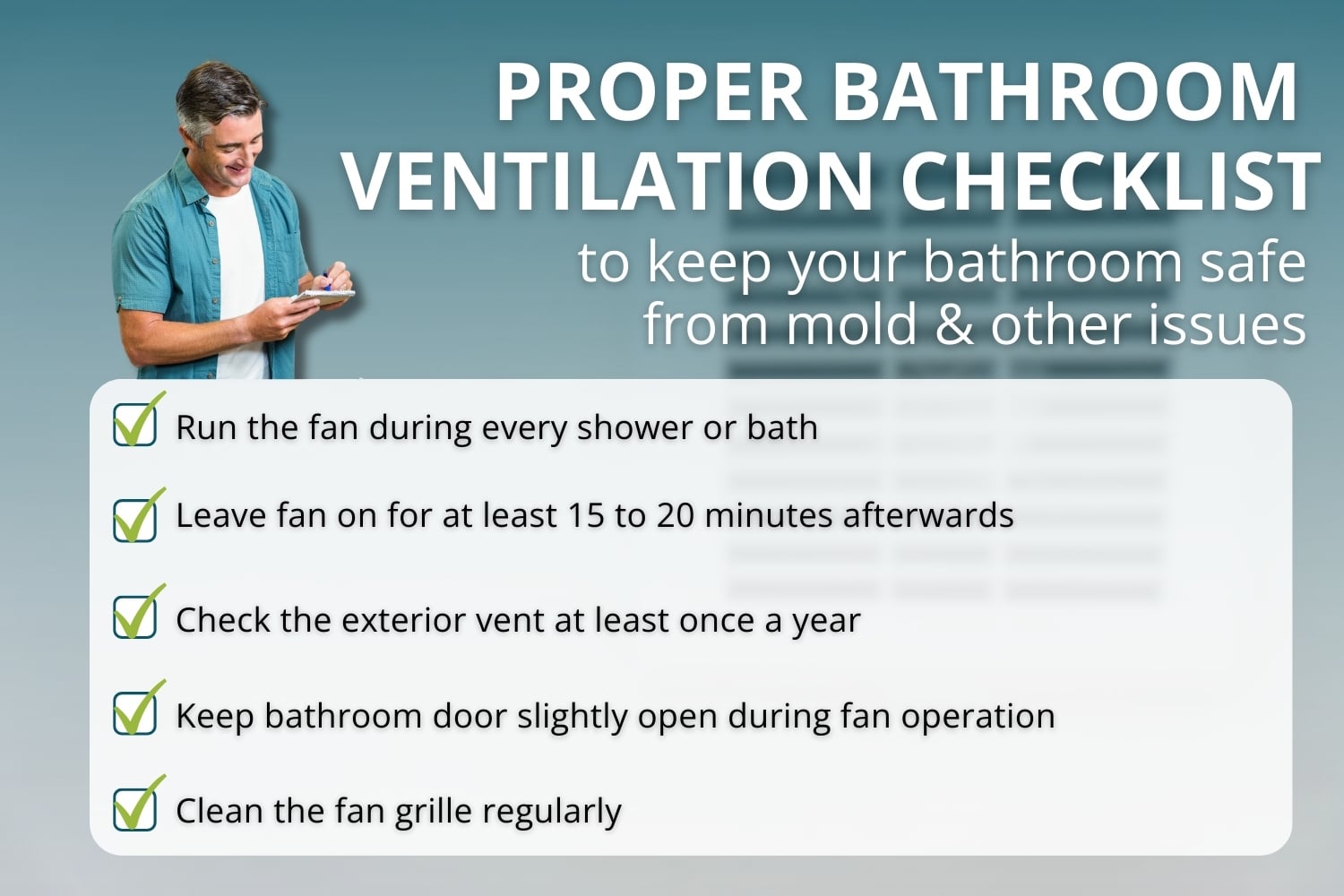
- Run the fan during every shower or bath and leave it on for at least 15 to 20 minutes afterward. This gives the fan enough time to pull the remaining moisture out of the air. If you tend to forget, a fan timer switch is a small upgrade that makes a big difference.
- Clean the fan grille regularly. Dust and lint build up on the grille and reduce airflow. A quick wipe-down or vacuum every few months keeps things moving.
- Check the exterior vent at least once a year. Walk around the outside of your home and look at the vent cap. Make sure the damper flap moves freely, and nothing is blocking it. After a long winter, ice or debris can sometimes clog the opening.
- Keep the bathroom door slightly open or unoccupied during fan operation. The fan pulls air out of the room, and that air needs to be replaced. If the door is sealed tightly with no gap at the bottom, the fan can’t do its job efficiently.
- Watch for early warning signs. If you notice paint peeling on the bathroom ceiling, persistent condensation on windows, a musty smell, or mold forming in corners, your ventilation may not be adequate. These signs are worth addressing sooner rather than later.
Maintaining Air Quality in Your Bathroom
Maintaining good indoor air quality in your bathroom is essential for both your health and the longevity of your home. Bathrooms are naturally prone to excess moisture and humidity, which, if not properly managed, can quickly lead to mold growth, peeling paint, and even peeling wallpaper.
A well-designed bathroom ventilation system, anchored by a reliable exhaust fan, is your first line of defense against these issues. By continuously removing moist air and pollutants, a proper bathroom ventilation setup helps keep humidity levels in check and prevents the buildup of mold and mildew.
This not only protects your walls, ceilings, and fixtures from damage but also ensures that the air you breathe remains fresh and healthy.
To maintain optimal air quality, make sure your exhaust fan is appropriately sized for your bathroom and runs long enough after each shower or bath to clear out excess moisture. Regularly clean the fan and check that the exterior vent is free from obstructions.
If you notice signs like persistent condensation, musty smells, or visible mold, it’s a clear signal that your ventilation system needs attention.
Investing in a good bathroom ventilation system is a simple yet effective way to safeguard your home against moisture-related problems and maintain a comfortable, healthy environment. By staying proactive with your bathroom ventilation, you can prevent costly repairs and enjoy better air quality every day.
Questions About Bathroom Ventilation
What causes mold to grow on a bathroom ceiling?
When moisture from showers and baths doesn’t get removed fast enough, it collects on the ceiling, which is often the coolest surface in the room. Over time, that repeated exposure creates the conditions mold needs to take hold. Painting a bathroom ceiling with moisture-resistant paint helps, but it won’t solve the problem if the ventilation isn’t doing its job. The root issue is almost always airflow.
How does bathroom moisture affect the attic above it?
If the exhaust fan is vented into the attic instead of to the exterior, warm, moist air gets trapped against the roof sheathing.
In New Hampshire and Maine winters, that moisture can freeze on the underside of the roof deck and then thaw as temperatures rise, leading to water stains, wood rot, and mold.
What should the humidity level be in my home?
Indoor humidity should generally stay between 30% and 50%. Bathrooms will spike higher during a shower, but the rest of the home should stay within that range.
If you’re noticing condensation on windows, musty smells in the basement, or mold forming in corners, a hygrometer can help you track humidity levels and figure out where the problem is coming from.
How do I know if my bathroom has a moisture problem I can’t see?
Sometimes the damage is behind walls or above the ceiling where you can’t easily spot it. Peeling paint, a soft or discolored ceiling, a persistent musty smell, or mold forming around the exhaust fan grille are all signs that moisture has been building up over time.
A home inspection can identify these issues and trace them back to the source, whether it’s a ductwork problem, a missing fan, or something else entirely.
When to Call a Professional
If your exhaust fan has stopped working, makes grinding or rattling noises, or doesn’t seem to pull any air, it’s time to call a licensed electrician or HVAC technician.
For homebuyers, bathroom ventilation is one of many systems that a qualified home inspector evaluates during the buying process. It’s something that’s easy to overlook during a walkthrough, but can point to bigger moisture and air quality concerns in the home.
If you’re buying or selling a home in New Hampshire or southern Maine, a professional inspection can catch these issues before they become expensive surprises. At Alpha Building Inspections, we look at every bathroom closely, from the fan and ductwork to the ceiling, walls, and attic space above.
We also test for radon, check attic conditions, evaluate septic systems, and inspect all the components that contribute to a safe, well-maintained home.