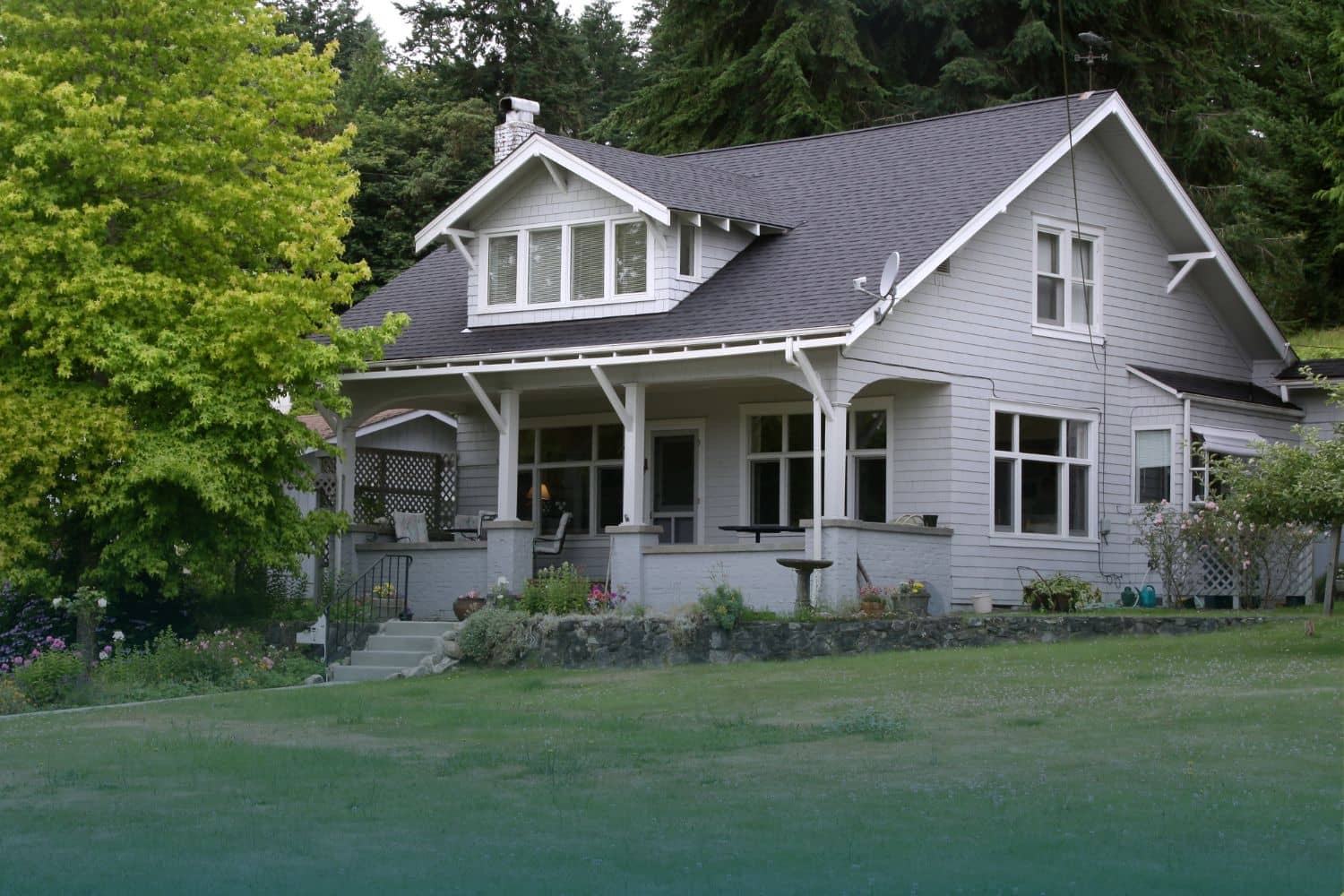
The typical home in New Hampshire, Massachusetts, and Maine is around 60 years old, and older homes need a different kind of inspection than new construction.
At Alpha Building Inspections, we’ve completed more than 11,000 home inspections across New England over 20+ years, and the older the house, the more systems we check closely: wiring, plumbing, the foundation, and materials that were common decades ago but aren’t considered safe today.
Here’s what a home inspection for an older home actually covers, what it costs, and how to use the report to buy with confidence.
What Makes an Older Home Inspection Different
An inspection on an older home takes longer and looks harder at systems that newer construction doesn’t have. A house built in 1965 gets the same walkthrough as a house built in 2015, roof, attic, basement, electrical panel, plumbing, and grounds. But an older home adds layers: multiple generations of wiring, materials no longer used, and decades of DIY repairs stacked on top of each other.
Inspectors trained in historic and older-home inspection know that an old house often has electrical components from more than one era in the same wall, some energized, some not. That’s normal for a 100-year-old home. It’s also exactly why an inspector who knows New England’s older housing stock catches things a generalist might miss.
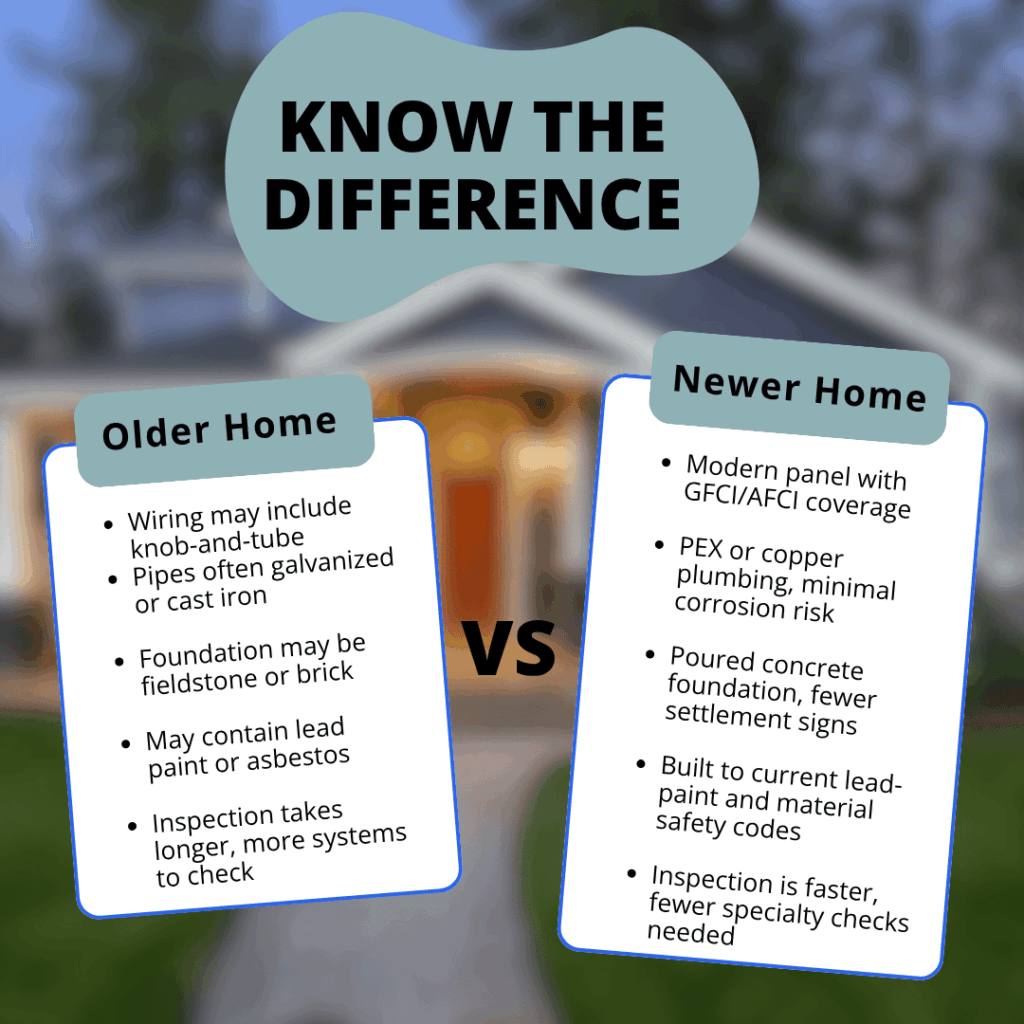
The table below shows how the focus shifts between newer and older homes:
| System | Newer Home (post-1990) Focus | Older Home (pre-1978) Focus |
| Electrical | Panel capacity, GFCI/AFCI coverage | Knob-and-tube wiring, undersized panels, ungrounded outlets |
| Plumbing | PEX/copper condition | Galvanized or cast-iron pipe corrosion |
| Foundation | Settling, drainage | Fieldstone/brick deterioration, frost heave |
| Materials | Code compliance | Lead paint, asbestos, no vapor barriers |
The Systems Inspectors Check Closest in Older Homes
Let’s look at an overview, system by system. For a deeper look at how inspectors evaluate specific architectural styles like Cape Cods, Colonials, and Victorians, see our guide on how inspectors evaluate classic New England style homes.
Electrical
Older homes often mix eras of wiring in the same house. Knob-and-tube wiring, common before the 1950s, wasn’t built for modern loads like central air or a home office full of electronics. Inspectors check the panel size, look for double-tapped breakers, and flag any wiring that’s been added without a permit.
Some insurers won’t write a policy on a home with active knob-and-tube wiring in use, so this section of the report can affect your closing timeline, not just your to-do list.
Plumbing
Galvanized steel pipes rust from the inside out, which shows up as low water pressure long before a visible leak. Cast-iron drain lines crack with age and tree-root intrusion. An inspector runs water at multiple fixtures at once to check pressure and looks for water staining that points to a slow leak inside a wall or ceiling.
Foundation and Structure
Many older New England homes rest on fieldstone, brick, or early poured concrete rather than modern poured foundations. These materials can shift with New Hampshire and Maine’s freeze-thaw cycles.
Inspectors look for cracking mortar, uneven floors, and doors that no longer close square, all signs of settlement worth understanding before you make an offer.
Environmental Hazards Common in Older New England Homes
Lead Paint
Homes built before 1978 may contain lead-based paint, and the federal government banned it in housing that year. A standard inspection can flag peeling or deteriorating paint as a concern, though lab testing is the only way to confirm lead is present.
If you’re planning renovations on a pre-1978 home, the EPA’s lead-safe renovation guidance explains when a certified contractor is required.
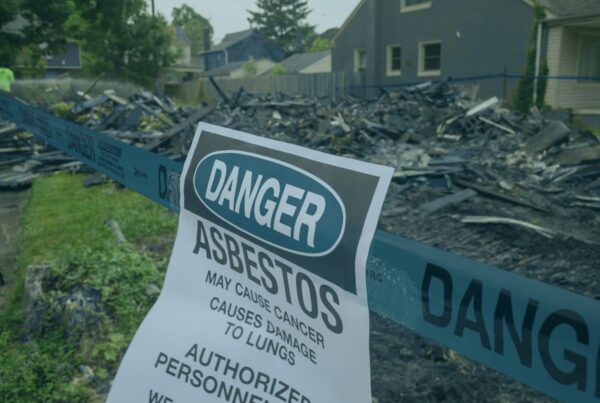
Asbestos
Asbestos shows up in old flooring, pipe insulation, and roofing materials well into the 1980s. An inspector can point out materials that look suspicious, but confirming asbestos also requires lab testing, not a visual check alone. We cover this in more detail in how to tell if a floor tile has asbestos.
Radon
Radon is invisible, odorless, and common in New England basements and crawl spaces, especially in homes with fieldstone or dirt-floor foundations. It isn’t part of a standard visual inspection, but Alpha offers same-day radon testing alongside a home inspection so you get results before your report deadline.
The EPA’s radon guidance recommends testing any home below the third floor, regardless of age.
What a Home Inspection for an Older Home Costs
A standard home inspection typically runs $300 to $500, but older homes usually add $50 to $200 to that base rate because the inspection takes longer. A 1965 ranch with original wiring and a fieldstone foundation simply requires more time to evaluate properly than a 10-year-old home with the same square footage.
Specialized testing adds to the total:
- Radon testing: often bundled or a modest add-on
- Asbestos or lead sampling: lab fees vary, typically $100 to $300 per sample
- Well and septic testing: common for older, more rural New England properties
Budget for the inspection itself plus a buffer for any specialist follow-up your inspector recommends. It’s a small cost next to what an unnoticed foundation or electrical issue could cost after closing.

Related Questions to Explore
How much more does it cost to inspect an older home? Expect to pay $50 to $200 above the standard rate, mainly because of the extra time needed to evaluate older wiring, plumbing, and foundation materials.
What’s the biggest red flag inspectors find in older homes? Active knob-and-tube wiring and foundation settlement are two of the most common issues that affect financing, insurance, and negotiation.
Can I still get a mortgage on a house with knob-and-tube wiring? Often yes, but some lenders and insurers require it to be updated either before or shortly after closing. Ask your lender directly, since policies vary.
Do I need a separate lead paint or asbestos inspection? A standard inspection can flag suspect materials, but only lab testing confirms lead or asbestos. Ask your inspector about add-on testing if the home was built before 1980.
How often should an older home be inspected? Beyond the pre-purchase inspection, older homes benefit from a check every 3 to 5 years, more often if you notice new cracks, moisture, or drafts. For more on how age affects a home’s structure over time, see does ceiling height vary for old vs new homes.
When to Call a Professional
If you’re buying, selling, or maintaining an older home anywhere in New Hampshire, Massachusetts, or Maine, a licensed inspector experienced with older housing stock is worth the call before you’re locked into a purchase or a repair estimate.
Alpha Building Inspections has inspected homes built across three centuries of New England construction, and we tell you plainly what’s a quick fix versus what needs a specialist, whether that’s an electrician for knob-and-tube wiring or a structural engineer for foundation movement.
Conclusion
An older home can be a great buy, but it needs a closer look than a newer one. Keep these takeaways in mind:
- Older homes often mix eras of wiring, plumbing, and foundation materials, so the inspection takes longer and covers more ground.
- Lead paint, asbestos, and radon are common in pre-1978 New England homes and may need separate lab testing.
- Budget for the inspection plus a buffer for specialist add-ons your inspector may recommend.
Ready to find out what your older home is really telling you? Schedule your inspection with Alpha Building Inspections and get a clear, honest report from a team that’s inspected New England’s housing stock for two decades.