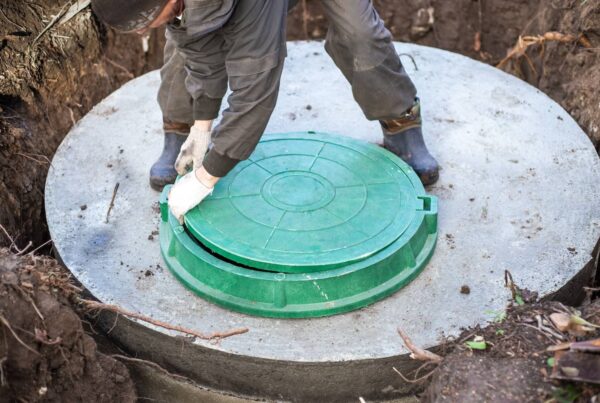
Most septic tanks sit 10 to 25 feet from the house and 4 inches to 4 feet underground, and you can usually find yours by checking your property records, tracing the main sewer line, or probing the yard. At Alpha Building Inspections, homeowners across New Hampshire and Maine ask us this question every week, especially before a pumping appointment or a septic inspection. Whether you just bought a home with a septic system or you’ve lived there for years without ever finding the tank, here are five ways to locate it, plus when it’s worth calling in a professional.
Check Your Property Records First
Your septic system’s location is often on file already, so check your paperwork before you touch a shovel. In New Hampshire, NH DES tracks septic permits and “as-built” system plans through its Subsurface Onestop portal, with records going back to 1967 for most properties. In Maine, the same information usually sits with your Town Office as an HHE-200 form, on file since 1974.
A few other places worth checking:
- The property survey, home inspection report, or seller’s disclosure from when you bought the home
- Your closing documents, which sometimes include a septic system diagram
- Your local health department or town office, if the online portal doesn’t have your property yet
If you’re not sure what any of this equipment actually does once you find it, our guide to how a septic system works breaks down the tank, drain field, and everything in between.
Trace the Main Sewer Line From Your Basement
If records come up empty, follow the pipe. Every drain in your house connects to one main line that leaves the building, and that line points straight at your tank.
- Go to your basement, crawl space, or utility area and find the roughly 4-inch pipe carrying wastewater out of the house.
- Note exactly where that pipe exits the foundation.
- Outside, walk a straight line from that exit point and push a soil probe into the ground every 2 feet.
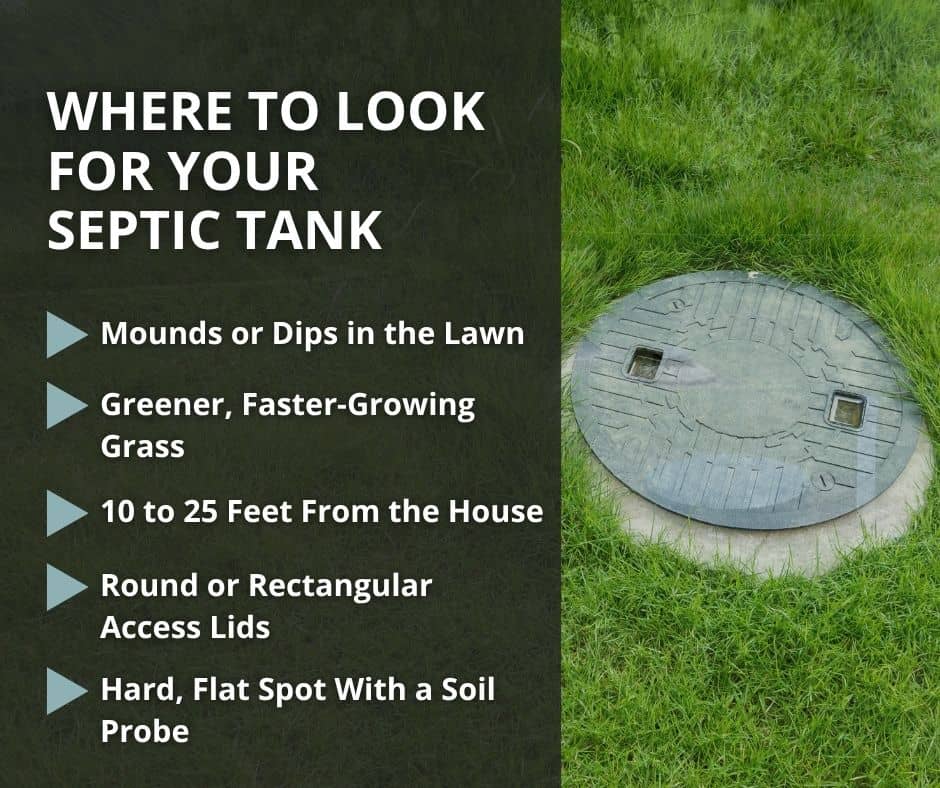
- Most systems in our area sit 10 to 25 feet from the foundation, though your town’s minimum setback can vary, so keep probing past that range if you don’t hit anything.
Look for Visual Clues in the Yard
Sometimes the yard gives away the tank’s location on its own. Walk your property and look for:
- A slight mound or dip in an otherwise flat lawn
- A patch of grass that’s noticeably greener or grows faster than the rest of the yard (often from nutrients near the tank)
- A spot that dries out faster, or stays soggier, than the surrounding soil after rain
None of these signs are guaranteed, but they narrow your search fast, and they’re free.
Probe the Soil to Pinpoint the Lid
Once you’ve narrowed a general area, a soil probe confirms the exact spot. Push the probe into the ground every few inches and feel for a hard, flat surface, typically 4 inches to 4 feet down. Most residential tanks have one to three access lids, with a combined footprint of roughly 5 by 8 feet.
Before you probe or dig, call 811 so any buried utility lines get marked first. If you’ve probed a reasonable area and still haven’t found anything solid, stop before you start digging blind. That’s the point where it’s worth calling a professional instead.
Ask a Previous Owner or Neighbor
A quick conversation can save hours of digging. The previous owner may remember the exact spot, or still have the paperwork. And homes built by the same developer in the same neighborhood often have septic tanks placed in similar spots relative to the house, so a neighbor with a comparable layout may be able to point you in the right direction.
Where Your Septic Tank Won’t Be
A few areas you can rule out right away:
- Under a paved driveway, patio, or other hardscaping
- Under a garage or an addition built after the original system, unless your records show otherwise
- Directly under large, established trees — installers typically keep tanks and drain fields clear of major root systems to protect the system long-term
Related Questions to Explore
How deep is a septic tank buried? Most residential tanks sit between 4 inches and 4 feet below the surface, depending on the system’s age and local frost line requirements. Deeper systems, especially older ones, may need risers installed to make future access easier.
How much does it cost to have a professional locate a septic tank? Locating a tank is usually part of a standard pumping or inspection visit, though some companies charge separately if a homeowner has no idea where to start. If you’re already scheduling a septic inspection, tank location is typically included.
Can I use a metal detector to find my septic tank? It can work, but only on tanks with metal components, like older concrete tanks with rebar or a metal lid. Plastic and fiberglass tanks, common in newer installs, won’t register on a metal detector, so a soil probe or property records are more reliable for those.
How often does a septic tank need to be pumped? The EPA recommends pumping every 3 to 5 years for most households, with inspections every 1 to 3 years. Actual frequency depends on tank size, household size, and water use.
What if I still can’t find my septic tank? Some older properties genuinely have incomplete records, especially systems installed before 1967 in New Hampshire or before 1974 in Maine. If you’ve checked records, traced the line, and probed the likely area without luck, it’s time to bring in a septic inspection professional with the right equipment. Learn more about what a septic inspection costs before you schedule one.
When to Call a Professional
DIY methods work for most homeowners, but a few situations call for a professional septic inspection instead:
-
- You’ve probed the likely area and found nothing after a reasonable effort
- You’re buying or selling a home, since many states require a septic evaluation before the property changes hands
- The system hasn’t been serviced in years and you want a full evaluation, not just a location
- You suspect a problem, like slow drains, wet spots in the yard, or odors, along with not knowing where the tank is
Alpha Building Inspections has served New Hampshire and southern Maine for over 20 years, and our InterNACHI-certified inspectors carry the equipment to locate a tank quickly and evaluate its condition at the same time, rather than sending you back out with a soil probe on your own.
Conclusion
Finding your septic tank usually comes down to three things: check what’s already on file, follow the sewer line, and read the signs in your yard. A few takeaways:
- Property records, both NH DES and Maine town offices, are usually your fastest option
- A soil probe confirms what records and visual clues only suggest
- If you’ve tried the DIY methods and still can’t pin it down, a septic inspection settles it in one visit
If you’re ready to skip the guesswork, schedule a septic inspection with Alpha Building Inspections and we’ll find it for you.